


On the evening of August 16, a spectacular artistic exchange performance linking the two sides of the Pacific was staged at the Xizang Autonomous Region Mass Art Center.
The delegation from the Oregon Rhythmic Gymnastics & Dance Academy performed alongside artists from the Xizang Autonomous Region Song and Dance Troupe, the Xizang Autonomous Region Mass Art Center, and the Xizang Autonomous Region Sports Dance Association, presenting 10 performances in total. The program featured a wide range of art forms, including traditional Tibetan song and dance, Tibetan opera, Tibetan street dance, as well as modern dance and rhythmic gymnastics from the United States.
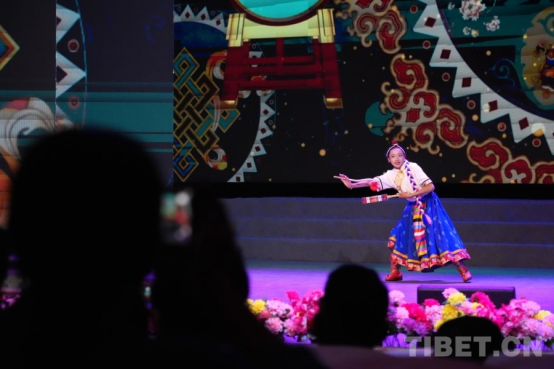
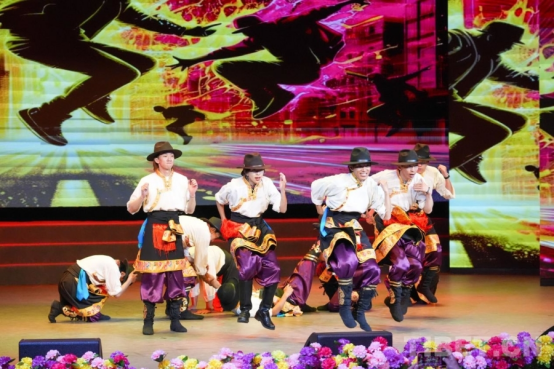
Tibetan Street Dance: “Joy in the Present”
Taking art as a bridge, the performance opened a dialogue between the cultures of the two countries. Among the highlights, the Xizang street dance piece “Joy in the Present” incorporated the music of the dranyen and the rhythms of traditional Dui Xie into breakdancing and locking. The collision of tradition and modernity drew thunderous applause from the audience. “It is incredible! Their movements are so synchronized. I have never seen a performance like this before,” said Marlowe Rogness Stuart, a student from the United States.
The U.S. delegation presented the duet “Body Logic,” the ballet solo “Reflections in Moonlight,” and the rhythmic gymnastics group performance “One Voice, One Earth,” using physical expression to convey reflections on art and culture. Notably, “One Voice, One Earth” was choreographed especially for this exchange. Performed by 10 American students, the piece conveys the idea that individuals are part of the Earth and share a common responsibility for humanity.
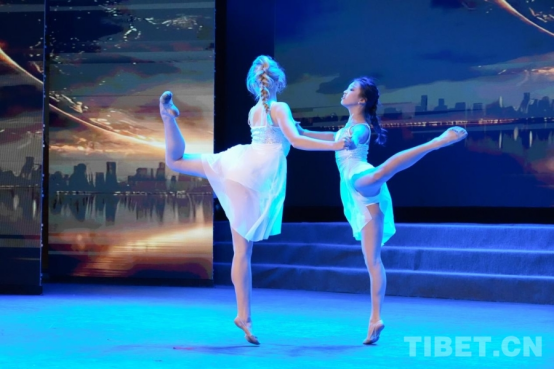
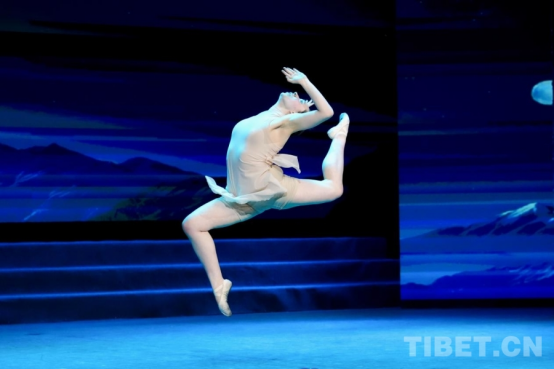
Ballet Solo: “Reflections in Moonlight”
Speaking about the inspiration behind the piece, Wuling Stephenson, head rhythmic gymnastics coach of the delegation, said, “This dance represents the purpose of our visit here. Although we come from different cultures and different places, we are all the same. We have the same blood flowing through our veins, and our hearts beat to the same rhythm.” She believes that dance itself is a force that transcends language. Through dance, young people from China and the U.S. have forged friendships. She added, “We hope to invite Chinese students to the United States in the future to experience what we are experiencing, so that this exchange can continue and more young people can take part in.”
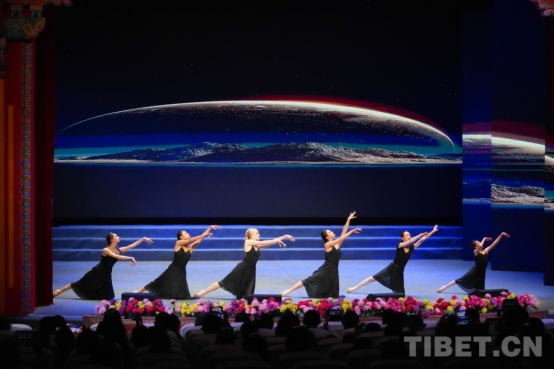
Rhythmic Gymnastics Group Performance: “One Voice, One Earth”
At the end of the performance, the Xizang Autonomous Region Song and Dance Troupe invited the American teachers and students to join them in performing the Guozhuang, a traditional Tibetan circle dance which was added to China's national intangible cultural heritage list in 2006. During the event, Chinese and U.S. youth joined hands in a circle, dancing and moving clockwise to the rhythmic music.
“This kind of cultural exchange is truly wonderful,” said Tashi, the director of the exchange performance. He noted that the young people from Xizang brought incredible energy and passion to the stage, expressing hope that more such opportunities will arise to share the rich cultural diversity of Xizang with the world.
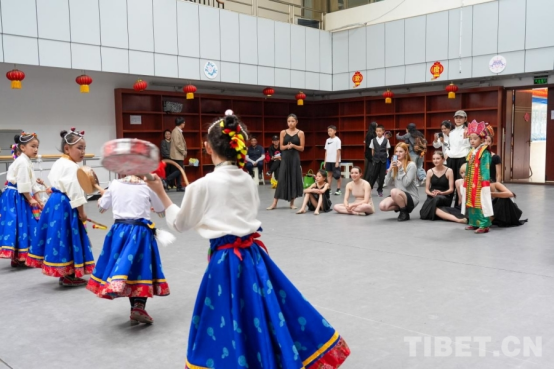
Students from the U.S. delegation watch children from Xizang perform the Reba dance during the rehearsal
Chen Xizhen, CEO of the Oregon Rhythmic Gymnastics & Dance Academy, was delighted to have this opportunity for young people from China and the U.S. to engage in close and direct dialogue and exchange. “We brought the American children here not simply to let them see it, but, more importantly, to help them understand it, get to know the people here, and share their own experiences back to the United States,” she said.
