


Article 15 of the Ethnic Unity and Progress Promotion Law, which came into effect on July 1, states, “The state respects and protects the learning and use of minority languages and scripts, promotes the standardization, normalization and informatization of minority languages and scripts, and supports the protection, collation, research and utilization of ancient books of minority groups.” Namgyal Tashi, deputy director and research fellow at the Research Centre for Fostering a Stronger Sense of the Chinese Nation as One Community, Xizang Academy of Social Sciences, noted that the promulgation and implementation of the law establishes a clear institutional framework for the scientific protection of ethnic languages and scripts—namely, standardization, normalization, and informatization—which has long been the shared goal of governments and academic communities at all levels.
“Tibetan is a supra-dialectal written language. Although pronunciation varies across different dialect regions, the written script remains unified,” Namgyal Tashi said. Over nearly a thousand years of development, Tibetan has evolved into a unified writing system that enables speakers of different dialects to communicate through the same written language, thereby preserving its supra-dialectal character and cultural cohesion. Standardization, he emphasized, is therefore the cornerstone of the scientific preservation of ethnic languages and scripts.
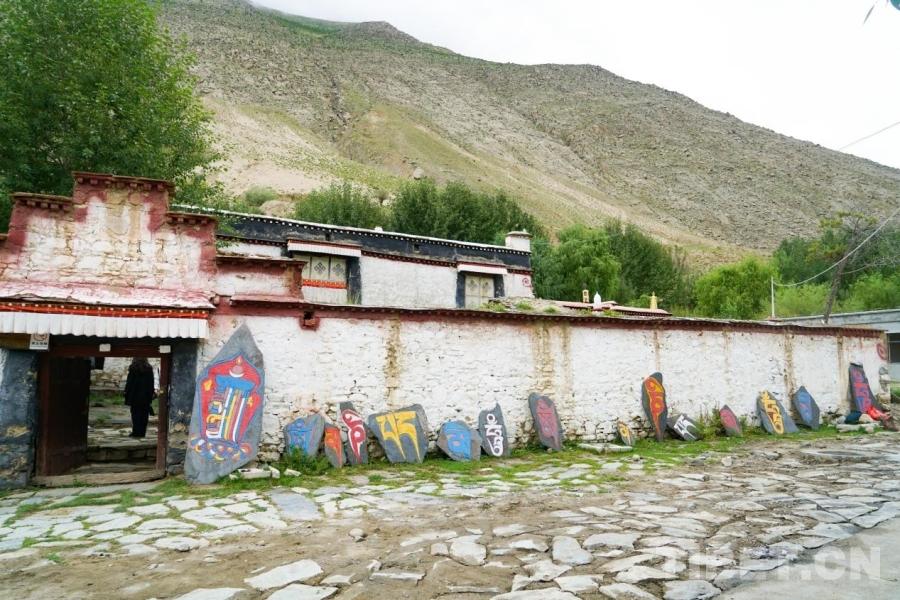
The former residence of Thonmi Sambhota, the creator of the Tibetan script, in Thunba Township, Nyemo County, Lhasa City, Xizang Autonomous Region.
With social progress and advances in information technology, an increasing number of new terms have entered ethnic minority languages. Rather than weakening their expressive capacity, the process of standardizing new terminology has enriched their vocabularies.
“Throughout history, Tibetan has incorporated many words borrowed through exchanges among different ethnic groups,” Namgyal Tashi explained. “According to the Dunhuang Old Tibetan manuscripts, during the Tubo period of the Tang Dynasty, Tibetan adopted a large number of Chinese words through phonetic transliteration. These borrowings not only greatly enriched the Tibetan vocabulary but also enhanced the language’s expressive capacity and word-formation ability. After nearly a thousand years of phonological evolution, some transliterated words are now part of its everyday vocabulary.” He added that the presence of loanwords is a universal feature of cultural interaction: English contains numerous words borrowed from French, while Japanese has borrowed extensively from Classical Chinese. Such borrowings enrich linguistic expression while making communication and mutual understanding easier.
To promote the standardized use of ethnic minority languages and scripts, the Xizang Autonomous Region established the Committee for the Standardization of Tibetan Translation of New Terms in 2005. The committee is responsible for collecting, translating, reviewing, standardizing, and officially publishing Tibetan equivalents for new terminology. In Xizang alone, nearly 10,000 frequently used Tibetan neologisms have been reviewed and standardized. Other key Tibetan-inhabited provinces, including Qinghai, have also continued similar work. These efforts reflect the Chinese government’s commitment to standardizing bilingual translation and strengthening the foundation for the proper use of ethnic minority languages.
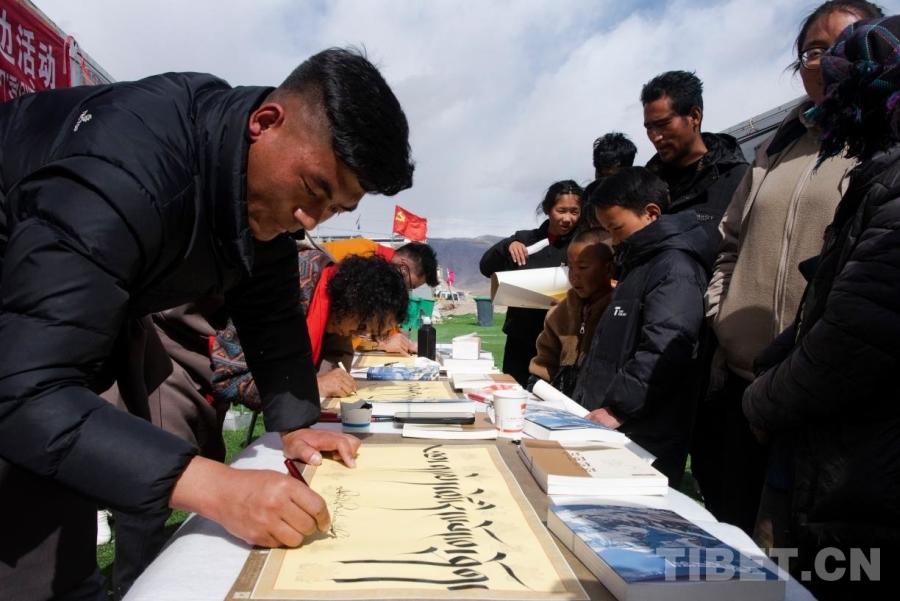
Before the Tibetan New Year, the Xigaze Federation of Literary and Art Circles organized calligraphers to write Tibetan New Year blessings for farmers and herders in Dinggye County.
To meet the demands of the digital era, standards for Tibetan have expanded beyond traditional writing to include keyboard input and digital display. In 1986, Professor Zhao Chenxing of Qinghai Normal University developed the world’s first Tibetan operating system. In July 1997, Academician Nyima Tashi of the Chinese Academy of Engineering and professor at Xizang University led the formulation of the international standard for Tibetan character encoding, making Tibetan the first ethnic minority script in China to obtain an international coding standard for information exchange. In March 2026, DeepZang, a Tibetan large language model and intelligent application platform, was launched in Lhasa. It became China’s first Tibetan large language model to complete the national filing process for generative artificial intelligence services. An increasing number of ethnic minority languages are now being presented in digital form. Even elderly people unfamiliar with Tibetan spelling can use Tibetan voice input to search for information with the assistance of AI and have the answers read aloud to them.
“Standardization provides the foundation for scientific preservation, while informatization offers the technological support for the inheritance and dissemination of languages and scripts,” Namgyal Tashi said. “Tibetan input and transmission have long been readily available on smartphones and other mobile devices, and Tibetan large language models have become indispensable digital tools in many people’s daily lives. These are tangible achievements of the informatization of ethnic minority languages and scripts.”
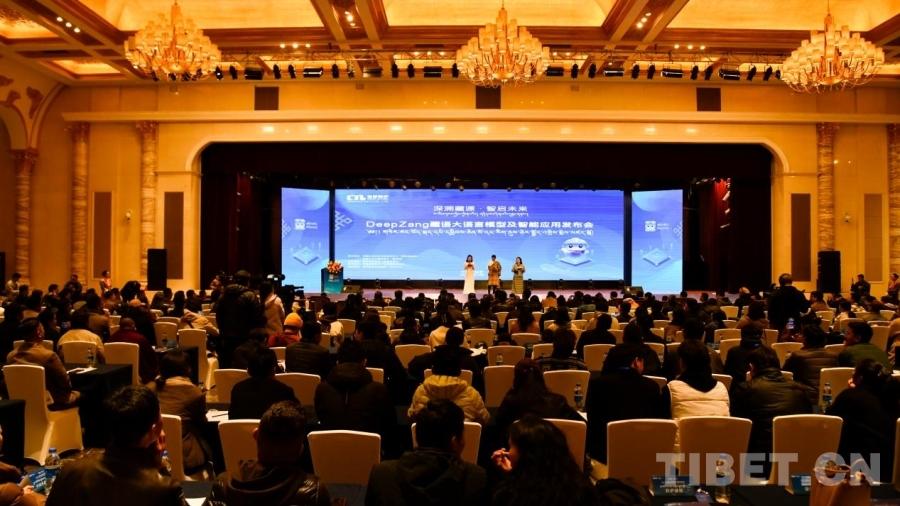
In March 2026, DeepZang, China’s first Tibetan large language model to complete the national filing process for generative artificial intelligence services, was launched in Lhasa.
From the standardization of traditional writing systems to their application in modern information technologies, the Ethnic Unity and Progress Promotion Law provides a solid legal foundation for the scientific preservation and continued development of the languages and scripts of all ethnic groups.
