


Recently, the so-called Tibetan government-in-exile announced the designation of Tibetan Identity Preservation Week and plans to launch a so-called global campaign aimed at obstructing the implementation of China’s Ethnic Unity and Progress Promotion Law. This illegal organization, which is not recognized by any country, has turned its so-called protection week into a political performance devoid of legitimacy from the outset. On one hand, it claims to seek greater international attention to the “Xizang question”; on the other, it seeks to foment a sense of identity among Tibetans in exile. Strip away the pretense of protecting identity, and what remains is yet another political maneuver by the Dalai group: holding Tibetans abroad hostage while fawning on the United States and other Western countries in the hope of securing political handouts.
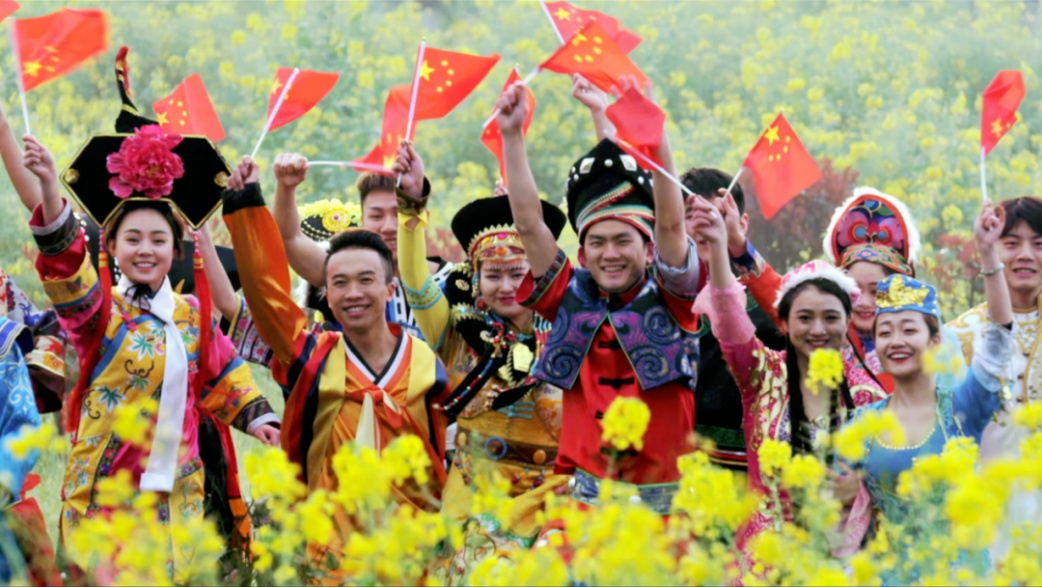
The six-part documentary Pomegranate Blossoms: Forging a Strong Sense of Community for the Chinese Nation. Source: CCTV.com.
Before claiming to protect an identity, one must first establish one’s own standing. China’s Ministry of Foreign Affairs has clarified that “the so-called Tibetan government-in-exile is entirely a separatist political group. It is an illegal organization that violates China’s Constitution and laws. No country in the world recognizes it.” Neither the 14th Dalai Lama nor the organization has the right to represent the people of Xizang or determine the region’s future and destiny. An organization that has no legitimacy of its own now claims to “preserve” the identity of others. The contradiction is absurd in itself. At its core, the so-called global campaign is an attempt to curry favor with the United States and other Western countries in exchange for political handouts and media attention. Hu Yan, a professor at the Party School of the CPC Central Committee, previously pointed out that Tibetans living abroad can lawfully acquire citizenship in their countries of residence and become legal citizens there. Yet the so-called Tibetan government-in-exile has gone to great lengths to prevent them from doing so, depriving them of the right to pursue happiness according to their own wishes. What the Dalai group has always cared about is not the identity of Tibetans in exile, but the political value it can derive from exploiting them as symbols of “refugees.” Refugee status serves as a “victim card” for the Dalai group to promote its separatist agenda internationally, as well as a bargaining chip its leaders use to obtain international aid under false pretenses.
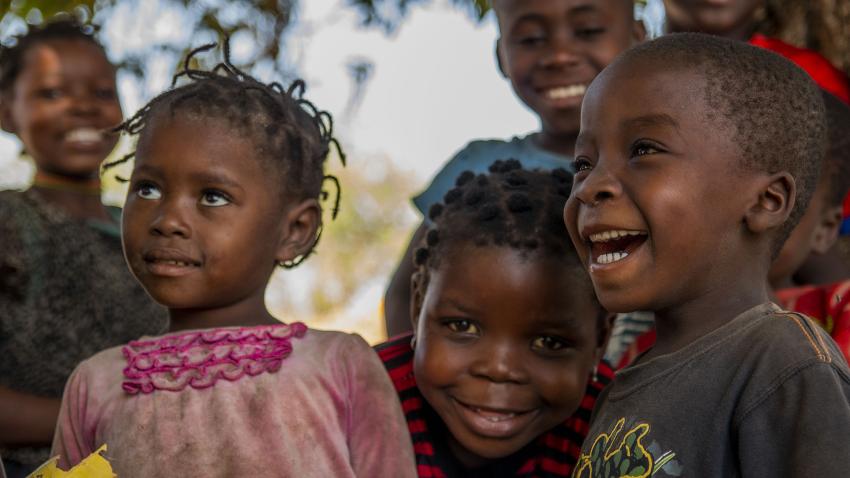
Children (and their families) at Metuge IDP camp in Mozambique. Source: United Nations website.
The Dalai group continues to manipulate the issue of identity, hoping to use political theatrics to obscure the facts. Its plan to stage protests around the touring film event on Xizang-related themes is nothing new. Since its launch in Zurich in 2009, it has served not as a genuine forum for artistic exchange through film, but as a platform for peddling a separatist narrative by leveraging Western venues, funding and celebrity clout. The Dalai group has even gone so far as to put the lives of Tibetans abroad at risk, pressuring them to resort to self-immolation, hunger strikes, vandalism and other disruptive acts. More recently, when organizing a so-called protest in India, it reportedly had a fourth-grade pupil, the nine-year-old Ngawang Gelek, take part in a relay-style hunger strike, then boasted that he was the youngest participant. Ignoring warnings from the World Health Organization and disregarding Ngawang Gelek’s status as a primary school student, the Dalai group has treated an innocent and vulnerable child as a tool for its “protest activities.” From a nine-year-old child’s hunger strike to self-immolation protests and political theatrics at the film event, the Dalai group’s so-called protests amount to little more than begging its patrons for handouts. These despicable tactics are not only crude; they also expose the group’s desperation as it approaches a dead end.
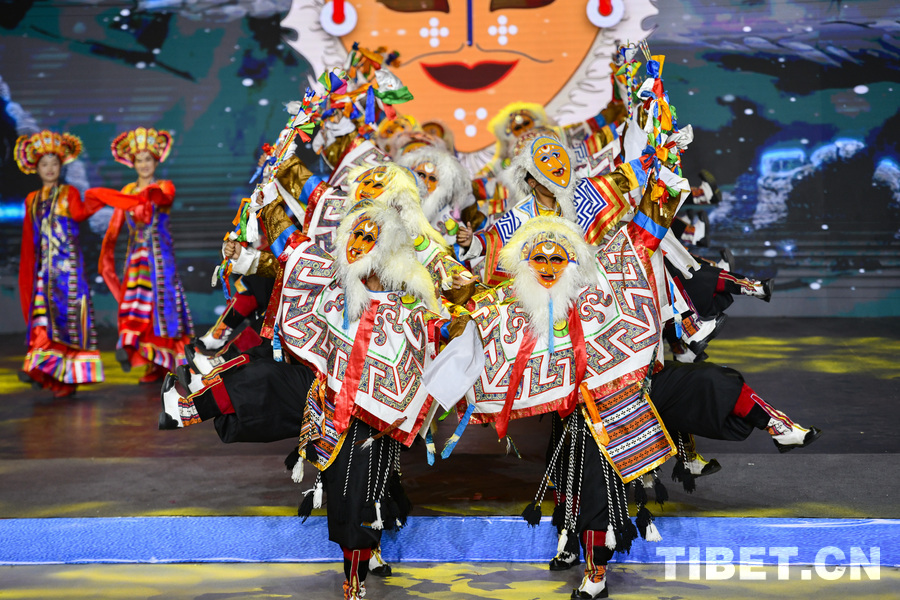
Tibetan opera performance staged at Xizang’s first Intangible Cultural Heritage Week in 2025.
What truly protects Xizang’s culture and safeguards the rights and interests of people of all ethnic groups in Xizang is the Chinese government, its laws and concrete policy measures. The Ethnic Unity and Progress Promotion Law, which took effect on July 1, 2026, is the first foundational, comprehensive and overarching law in China’s work on ethnic affairs. It elevates the effort to forge a strong sense of community for the Chinese nation from a value-based appeal to a matter enshrined in national institutions, statutory responsibilities and social norms. Zeli, secretary of the Party leadership group of the Xizang Academy of Social Sciences and chairperson of the Xizang Federation of Social Sciences, pointed out, “Ethnic unity is the lifeline of all ethnic groups in China. For Xizang, ethnic unity is the foundation and prerequisite for accomplishing the four major tasks of ensuring stability, promoting development, protecting the eco-environment and strengthening the borders.” Professor Dabao Tsering of the Party School of the CPC Xizang Autonomous Region Committee summed up the law’s structure in one sentence: “The preamble sets the direction, the general provisions lay down the principles, the specific provisions ensure implementation, the oversight provisions reinforce accountability, the accountability provisions set the bottom line, and the supplementary provisions ensure coherence.” The law explicitly stipulates that “the state shall promote common ground while respecting and accommodating differences.” Xizang currently has 3,845 intangible cultural heritage items at various levels. With state support, Tibetan opera, the Gesar epic tradition, and Lum medicinal bathing of Sowa Rigpa have been inscribed on UNESCO’s Representative List of the Intangible Cultural Heritage of Humanity. Placing cultural protection on a firm legal footing is the strongest way to safeguard Tibetan culture.
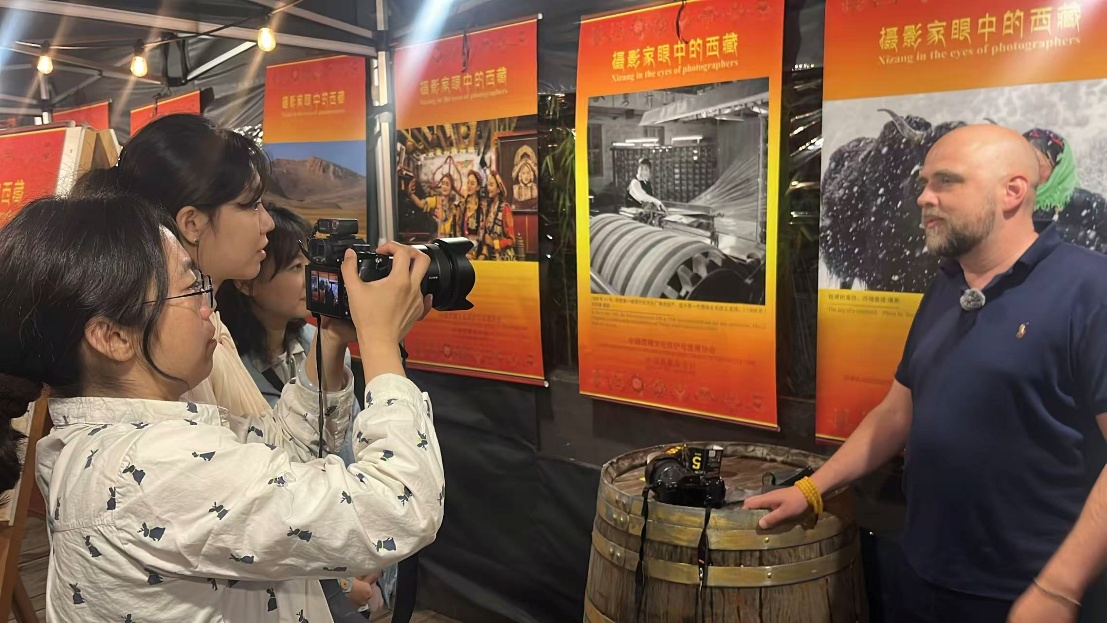
“Xizang Today” photo exhibition in Switzerland.
If the Dalai group cannot even safeguard itself, whom can it protect? Its so-called campaign to preserve Tibetan identity is merely a scheme to use Tibetans abroad as its “stake” in a reckless gamble and as hostages to be traded. Why would the Dalai group prefer to keep Tibetans in exile permanently labeled as “refugees” rather than allow them to become legal citizens of their countries of residence and live stable, peaceful lives? Because once Tibetans in exile truly integrate into local society, the exile narrative on which the Dalai group depends for its survival will lose its foundation. Increasing numbers of Tibetans living abroad have seen the Dalai group for what it is. Unwilling to collude with it, they are leaving places of strife and freeing themselves from its control. According to publicly available data, the number of Tibetans living in India has declined sharply, and some settlements have become nearly deserted. The Dalai group’s attempt to keep Tibetans abroad under its control and continue playing the “victim card” is becoming increasingly untenable. The so-called identity preservation effort has never been about preserving Tibetan identity. It is about shoring up the Dalai group’s own dwindling relevance. This illegitimate political spectacle can neither preserve the identity of Tibetans living abroad nor alter the reality of Xizang’s prosperity and development today. (By Jigme)
Editor:Bella Wu
