


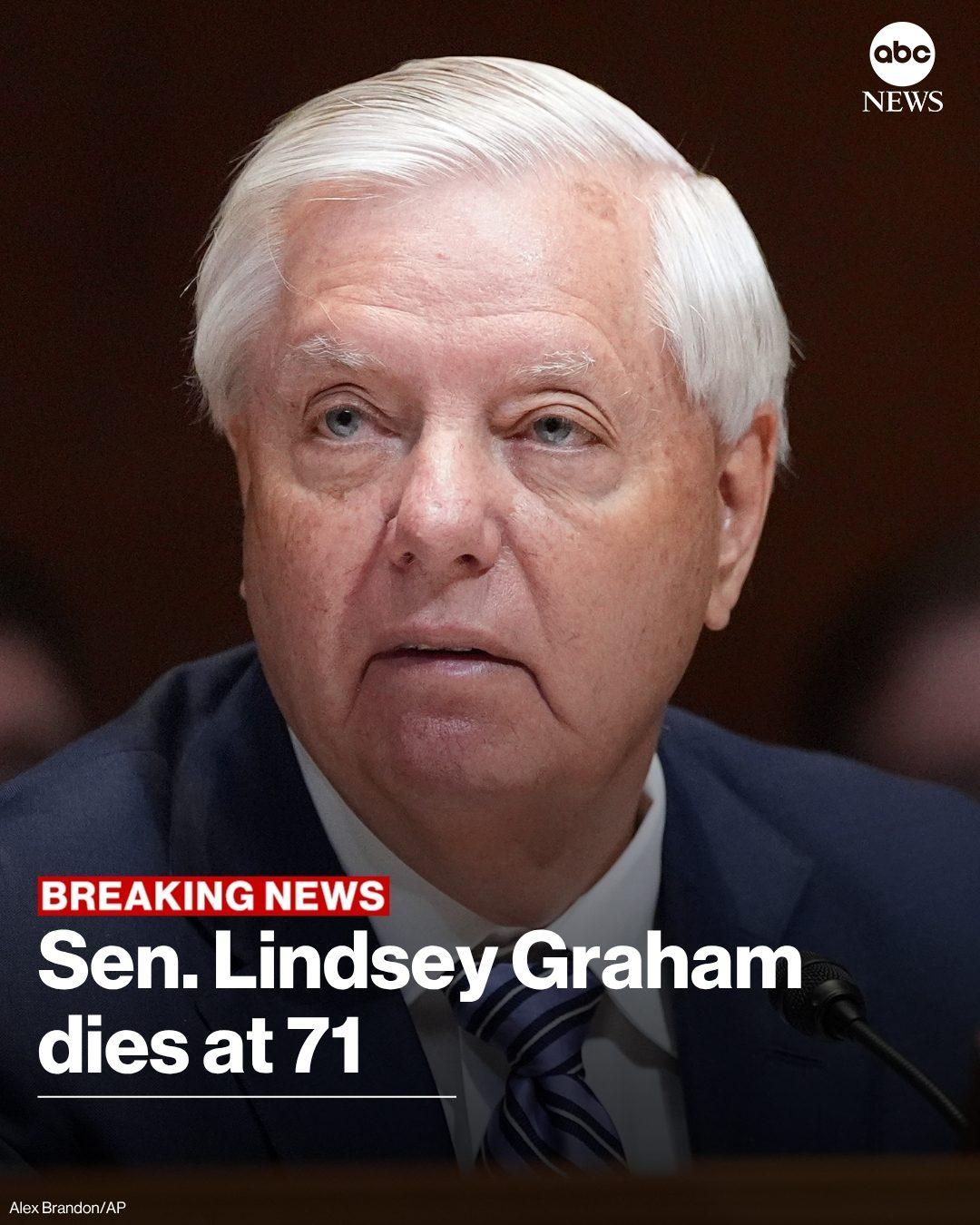
U.S. Senator Lindsey Graham, 71, dies. Photo: ABC News
On July 11, Lindsey Graham, a 71-year-old U.S. senator, died suddenly following cardiac arrest. The veteran politician, widely criticized by many commentators as a “war hawk” for advocating military intervention, stoking confrontation, and interfering in the internal affairs of other countries, was later the subject of a memorial prayer from the 14th Dalai Lama. When a separatist figure cloaked in religious authority offers prayers for a politician portrayed as a champion of war, what lies behind this striking juxtaposition is yet another convergence of anti-China politics and separatist agendas.
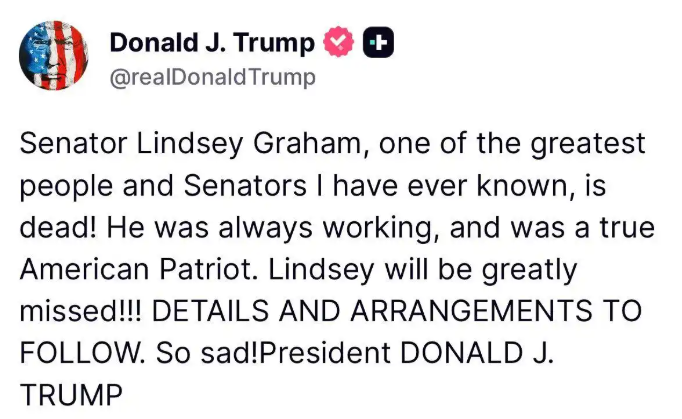
But who was Lindsey Graham? He was one of Washington’s most outspoken war hawks. For more than three decades, he consistently backed U.S. military interventions in Iraq, Afghanistan, Syria, Libya, and elsewhere. He was one of the driving forces behind President Trump’s push for military action against Iran, once describing a U.S.-Iran war as a fight over oil resources. He called on the U.S. military to seize Kharg Island, Iran’s key oil export terminal. He long served as Israel’s staunchest political backer, even publicly urging Israel to seize the Gaza Strip by force. In February 2024, Russia placed Graham on its list of terrorists and extremists. After Graham’s death, Iran’s state television openly celebrated the news, saying that the anti-Iran senator had gone to hell. Some Middle Eastern social media users also remarked that Graham had devoted his later years to advocating endless wars and that the world had become a better and safer place without him.
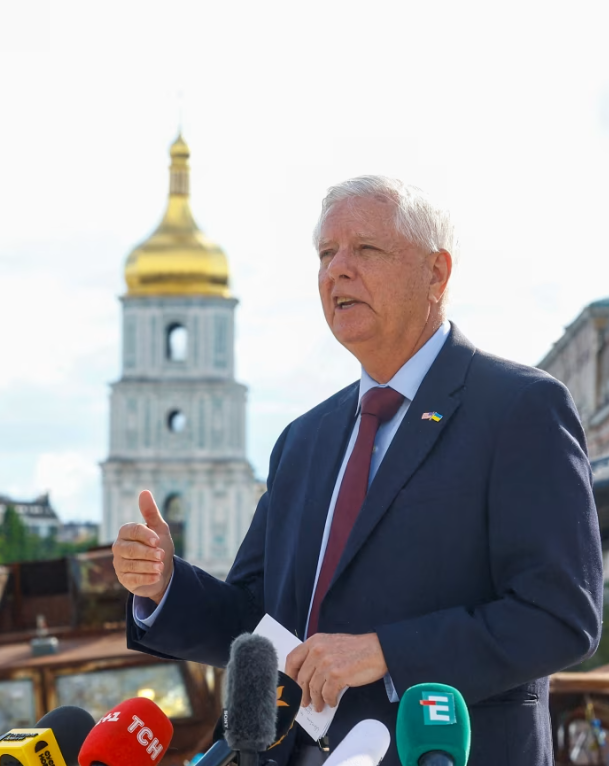
Graham was also an uncompromising anti-China hardliner and one of the Republican Party’s most aggressive China hawks. With more than three decades in Congress, a military background, the ability to build bipartisan coalitions, and direct access to the president, he wielded real influence over budget appropriations and national security issues. Among Washington’s China hawks, he was not a lone voice but a key organizer who brought together and amplified hardline positions. He made three provocative visits to China’s Taiwan region, in 1999, 2016 and 2022. In 2022, he led a bipartisan congressional delegation on a provocative visit to China’s Taiwan region aboard a U.S. military aircraft. He held high-profile meetings with then Taiwan regional leader Tsai Ing-wen and other officials, falsely claiming that abandoning Taiwan would mean abandoning the global order of freedom. He advocated arming Taiwan and threatened to impose sanctions from hell should the Chinese mainland use force against Taiwan. He also introduced the Taiwan Policy Act of 2022, which sought to expand U.S. military assistance to Taiwan. More ironically, just one day before his death, he made inflammatory remarks in Kyiv, claiming that the road to peace runs more through Beijing, in an apparent attempt to shift responsibility for the Ukraine crisis onto China.
Why, then, did the 14th Dalai Lama offer prayers for Graham? The answer is straightforward: birds of a feather flock together. The 14th Dalai Lama is neither a pure religious figure, nor a nonviolent and peaceful person. Rather, he is a political exile who has long engaged in anti-China separatist activities and seeks to separate Xizang from China under the cloak of religion. Although Graham and the 14th Dalai Lama operated in different spheres, they served the same objective—to weaken and divide China. Now that Graham is dead, the Dalai Lama’s prayers for him are portrayed as the final expression of a bond between two figures united by their anti-China agenda.
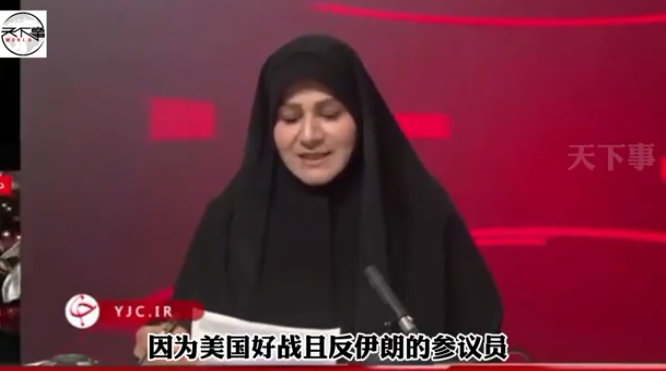
Graham’s death was welcomed in countries such as Iran, while many social media users across the Middle East expressed approval of the news. Russian political philosopher Aleksandr Dugin commented that Graham’s death was a case of reaping what one had sown. He also noted that Graham had never shown remorse for remarks such as describing the killing of Russians as “the best money we’ve ever spent”, and his sudden death was a fitting end to a man he regarded as an extremist. History will remember Graham for his relentless advocacy of military confrontation around the world. Whether or not the wars he championed continue after his death, they have already left scars on the world that will not easily heal. By offering prayers for a war hawk like Graham, the 14th Dalai Lama has once again exposed his alignment with anti-China forces in the West. His rhetoric of “peace” and “compassion” serves merely as a cover for separatist ambitions.
The 14th Dalai Lama’s prayers for Graham were no coincidence but an inevitability. Separatist forces depend on anti-China forces, while anti-China forces cultivate separatist forces—they are cut from the same cloth. Graham’s sudden death was a fitting end for someone of his kind. Those who offered prayers for him and aligned themselves with him, including the 14th Dalai Lama, will meet the same fate. Taiwan and Xizang are an inalienable part of the Chinese territory, a fact grounded in history and law that no individual or force can alter. The 14th Dalai Lama and his followers should recognize the prevailing trend of history. History has repeatedly shown that those who betray their country, collude with external forces, and act as their accomplices are ultimately doomed to fail and bring disgrace upon themselves. (Text by Jigme)
