


A shocking scene unfolded recently in New Delhi, India’s capital. On October 10, Indian police boarded a plane that had just landed and detained Abhijeet Dipke, founder of the Cockroach Janta Party (CJP), along with two senior party leaders before the passengers had disembarked.
Meanwhile, thousands of police and paramilitary personnel patrolled the streets of New Delhi, enforcing a security lockdown and detaining dozens of protesters. Riot-control vehicles equipped with tear gas launchers were deployed along major roads, mobile internet services were suspended, and dozens of metro stations and markets were closed. According to Reuters and The Associated Press (AP), more than 2,000 people were detained in New Delhi alone. How did a youth organization that began as an online satire movement become such a threat in the eyes of the Indian government?
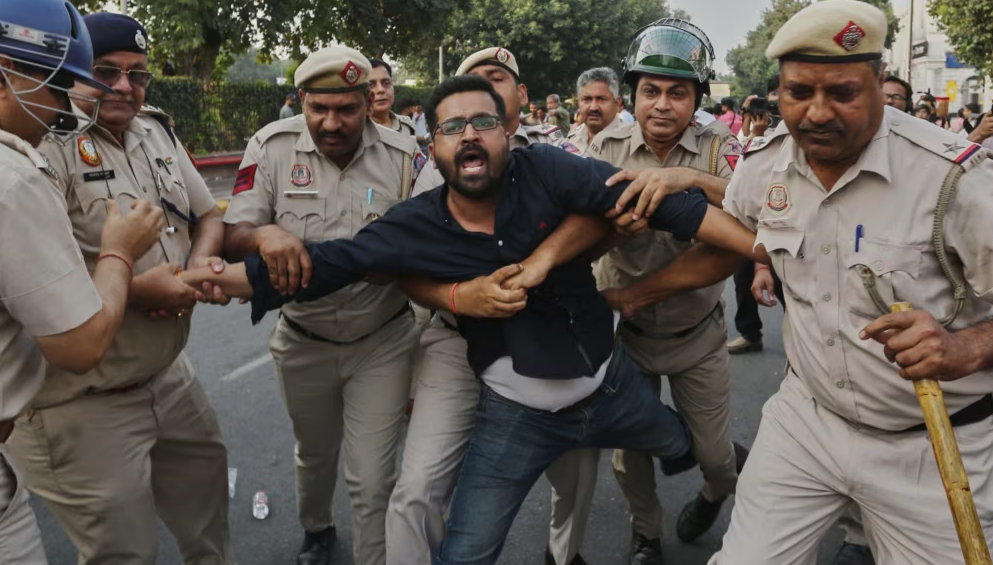
Indian police detain protesters from the CJP during a demonstration.
The CJP emerged from a controversy in May this year. During a supreme court hearing, Surya Kant, Chief Justice of India, compared unemployed young people to “cockroaches,” saying that they “cannot find jobs, have no place in any industry … and then start attacking everyone.”
The insulting remarks sparked an uproar on social media. Abhijeet Dipke, a student at Boston University, promptly founded a satirical political party online and named it the CJP. Rather than retreat in the face of the insult, young people embraced the label “cockroaches,” turning it into a symbol of resilience and perseverance. Within just a few days, the party had attracted more than 21 million followers on Instagram.
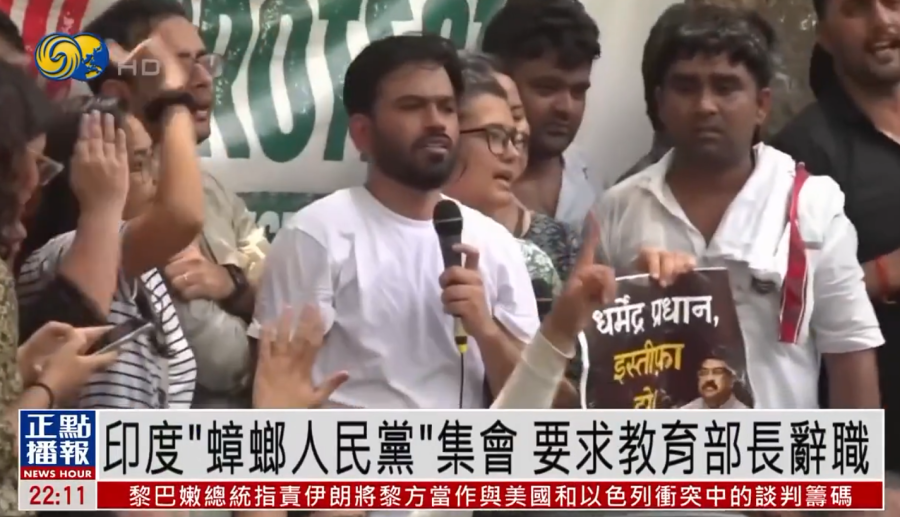
A rally by India’s CJP calls for the education minister’s resignation.
What truly took the movement from cyberspace to the streets was a scandal involving leaked questions for India’s national medical entrance examination. In May this year, more than 2.27 million candidates across India took the examination, competing for approximately 128,000 places. However, examination questions were leaked before the test, and at least 20 candidates died by suicide.
Protesters demanded the resignation of Education Minister Dharmendra Pradhan, who was eventually forced to step down in late July. The CJP subsequently turned its attention to the Election Commission. Since the revision of electoral rolls began last year, more than 133 million registered names have reportedly been removed from voter lists. Critics have pointed out that the process has had a severe impact on minority communities.
Faced with a rapidly growing protest movement, the Indian government chose arrests over dialogue. Police not only detained protest leaders but also set up checkpoints on roads leading to New Delhi, stopping buses, cars and other vehicles to search for demonstrators.
Even more shocking, according to AP, more than 30 journalists were briefly detained by police while covering the protests. Some were dragged away despite presenting their press credentials. The Committee to Protect Journalists condemned the incidents, describing them as “deeply troubling and a blot on India’s democratic traditions.”
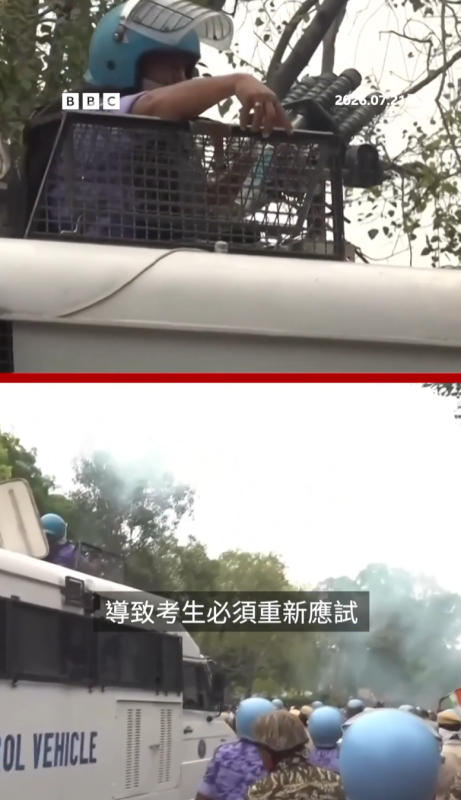
Indian police use tear gas and other means to disperse protesters.
If the mass arrests reveal the Indian government’s panic, its response to the Office of the United Nations High Commissioner for Human Rights (OHCHR) lays bare its guilty conscience. As the Indian government carried out the arrests, OHCHR issued a statement in Geneva calling on the Indian authorities to immediately and unconditionally release all those “arbitrarily detained” in New Delhi and urging the police to exercise restraint.
Yet Randhir Jaiswal, spokesperson for India’s Ministry of External Affairs, dismissed OHCHR’s concerns as “unwarranted” and “an unacceptable interference in the internal affairs of India.”
A government that proclaims itself the “world’s largest democracy” has refused to reflect on its own conduct in the face of legitimate concerns raised by a United Nations human rights body, instead rejecting them under the pretext of “interference in internal affairs.” This response speaks for itself.
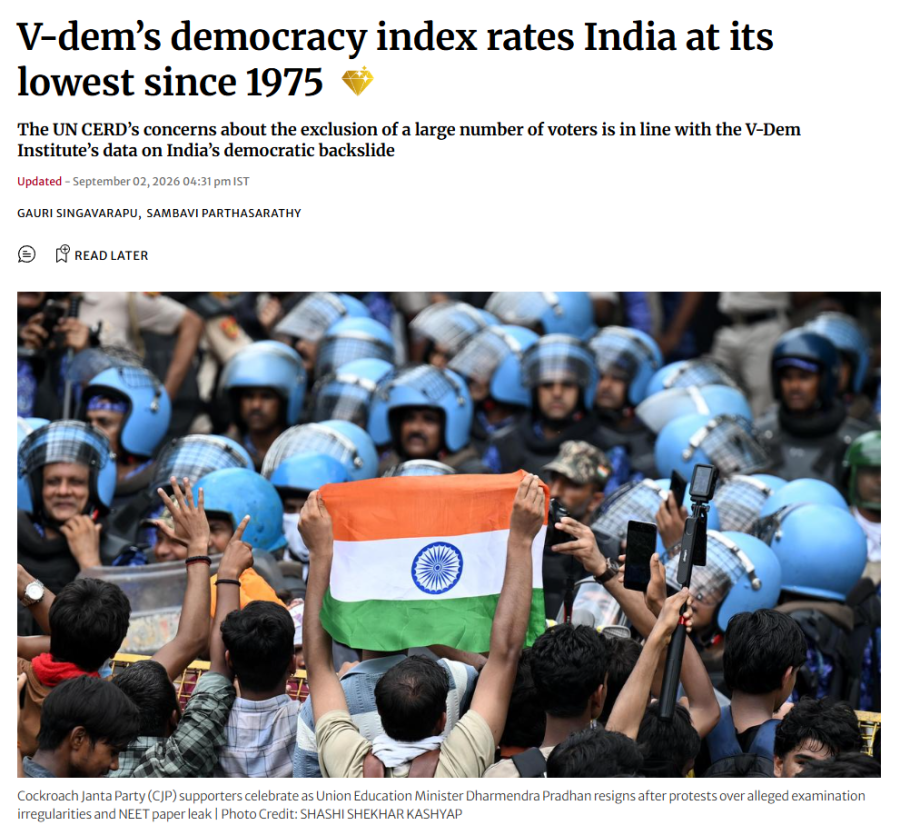
V-Dem Institute’s Democracy Report 2026 rates India’s democracy at its lowest level since 1975, the year of the Emergency
In fact, India’s human rights record has been deeply troubled for years. In February this year, UN human rights experts warned of a systemic failure in India’s policing system, citing issues including deaths in custody and torture. They pointed out that such actions “appear to substitute lawful policing and due process with summary violence.”
In August, the UN Committee on the Elimination of Racial Discrimination expressed grave concern over reports of large-scale violations by law enforcement officials against ethnic and ethno-religious groups in India, including extrajudicial killings, arbitrary detention and torture.
According to the V-Dem Institute’s Electoral Democracy Index, India’s level of democracy has fallen to its lowest point since the 1975 Emergency. Indicators such as judicial accountability and the autonomy of electoral management bodies are at their lowest levels in 50 years.
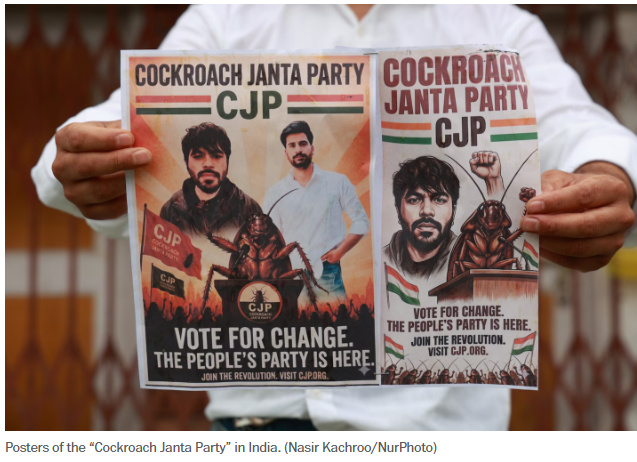
A promotional poster for India’s CJP.
Ironically, the Indian government violently suppresses peaceful protesters and cuts off internet access to carry out arrests at home, yet routinely lectures other countries on the international stage.
India faces a host of domestic problems: a vast wealth gap, a deeply entrenched caste system, and large numbers of young people who graduate only to find themselves unemployed. The hardships people face in their daily lives stand in stark contrast to the country’s vaunted image as the “world’s largest democracy,” exposing a widening and undeniable divide.
The Modi government has offered no convincing solutions. Instead, it has resorted to an old tactic: shifting attention abroad to deflect domestic discontent.
First, it took its frustrations out on Pakistan. On May 7, 2025, the Indian military launched “Operation Sindoor,” carrying out airstrikes against targets inside Pakistan. Pakistan retaliated, and the Pakistani side confirmed that it had shot down five Indian military aircraft.
After the fighting ended, Modi claimed in a public address following the ceasefire that India’s military action had plunged Pakistan into “utter despair,” and that Pakistani drones and missiles had fallen “like straws.” The rhetoric may have declared victory, but the aircraft had undeniably come down.
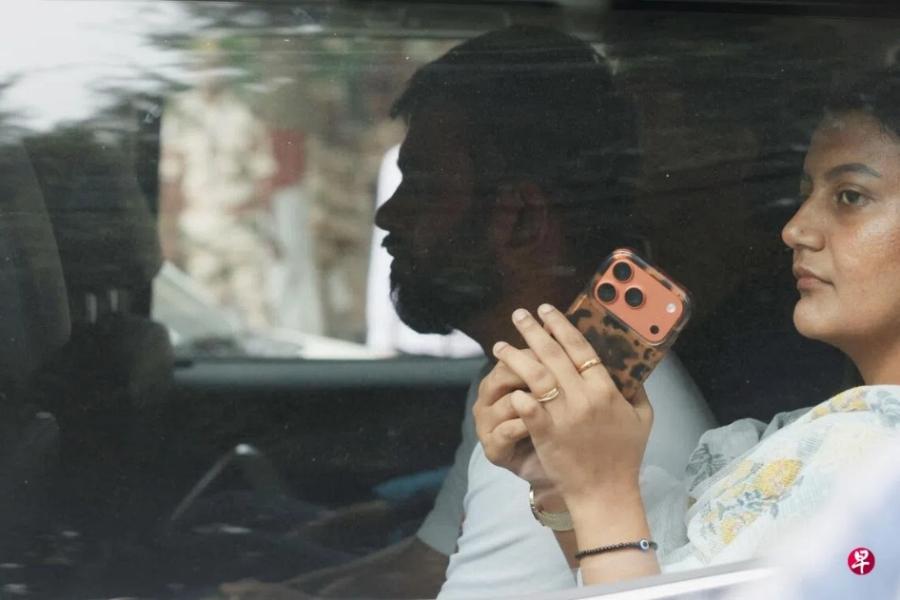
Dipke, wearing a white shirt, criticizes the Modi government after his release.
After hitting a hard wall in Pakistan, India turned to China to recover some lost ground, making an issue of Zangnan and Ladakh and announcing so-called “standardized place names.” It even went so far as to side with the Dalai group.
When China released the sixth batch of officially publicized standard names for places in Zangnan, India’s Ministry of External Affairs immediately voiced its “opposition.” China responded that the matter fell entirely within China’s sovereignty.
Yet when it comes to doing business and reopening border crossings, New Delhi adopts a different tone, seeking to resume operations at three traditional border trading markets, including Renqinggang–Changgu.
On the one hand, India continues to provoke China over border and Xizang-related questions; on the other, it has little choice but to sit down at the negotiating table and seek to resume trade. This contradictory posture lays bare the predicament behind the Modi government’s tough rhetoric on foreign policy.
After his release, Dipke called Modi “an embarrassment to India,” adding that “never has this country seen a bigger coward and bully.” His words may well reflect the sentiments of countless young Indians. (Text by Jigme)
Editor:Bella Wu
