


Recently, overseas “Xizang independence” organizations have made inflammatory remarks over a national defense awareness education activity held at a kindergarten in Cona City, Xizang Autonomous Region, claiming that Tibetan children are being exposed to military imagery and discipline training from an early age and are being instilled with a political ideology that threatens the survival of Tibetan culture. Reports show that the kindergarten simply made use of local revolutionary heritage resources to organize a series of educational activities themed around national defense awareness and ethnic unity. A group of children merely put on camouflage uniforms, held toy guns, and happily played a CS game. CS games are widely popular among young people and originated in the West. CS, short for Counter-Strike, is a classic first-person shooter game developed by the U.S. company Valve Software. It later became a staple of major international esports competitions. In addition to traditional online competitive modes, the game also features various offline gameplay formats. Through such malicious association, a children’s game has been distorted into militarized education by its critics. Such absurd and groundless claims are not only laughable, but also reveal an alarming willingness to exploit and smear children for political purposes, which is deeply disturbing.
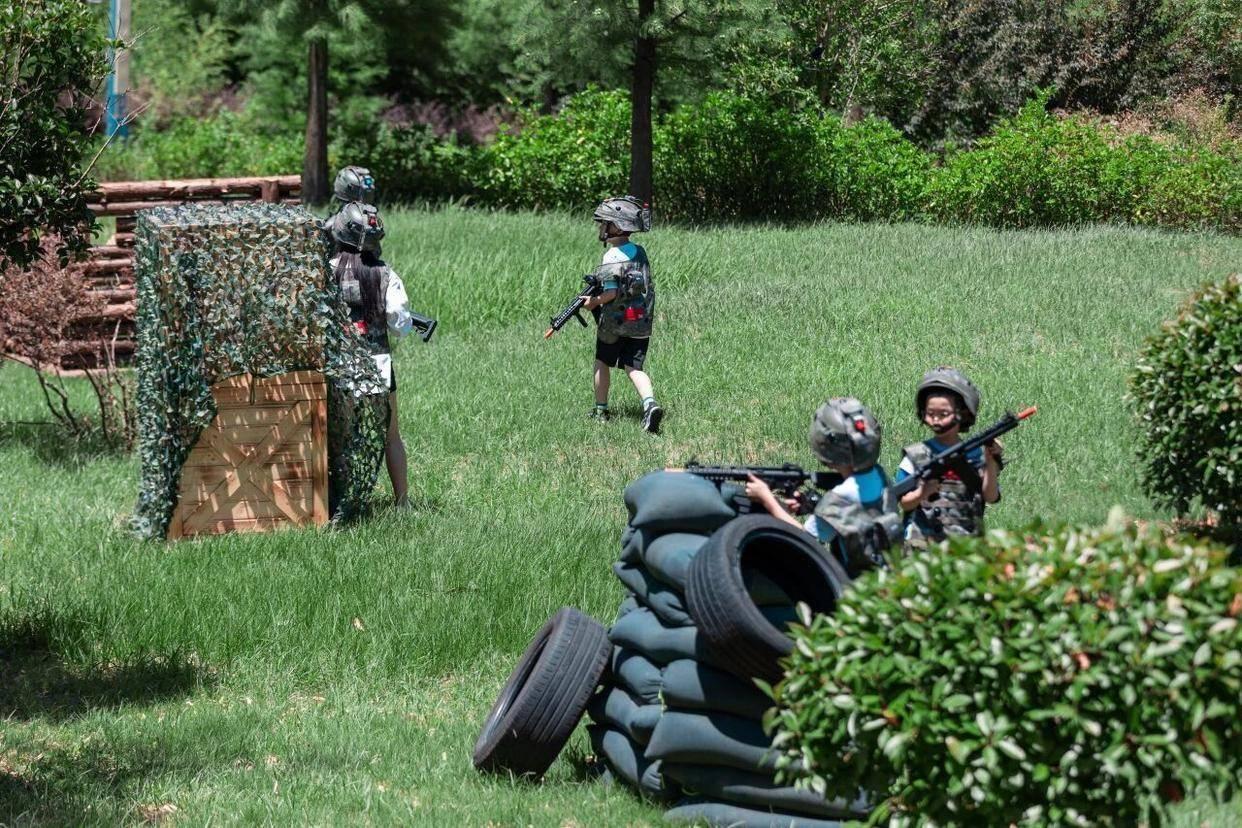
Children’s CS, an outdoor game activity combining sports, strategy, and role-playing elements, has become popular among parents and children alike.
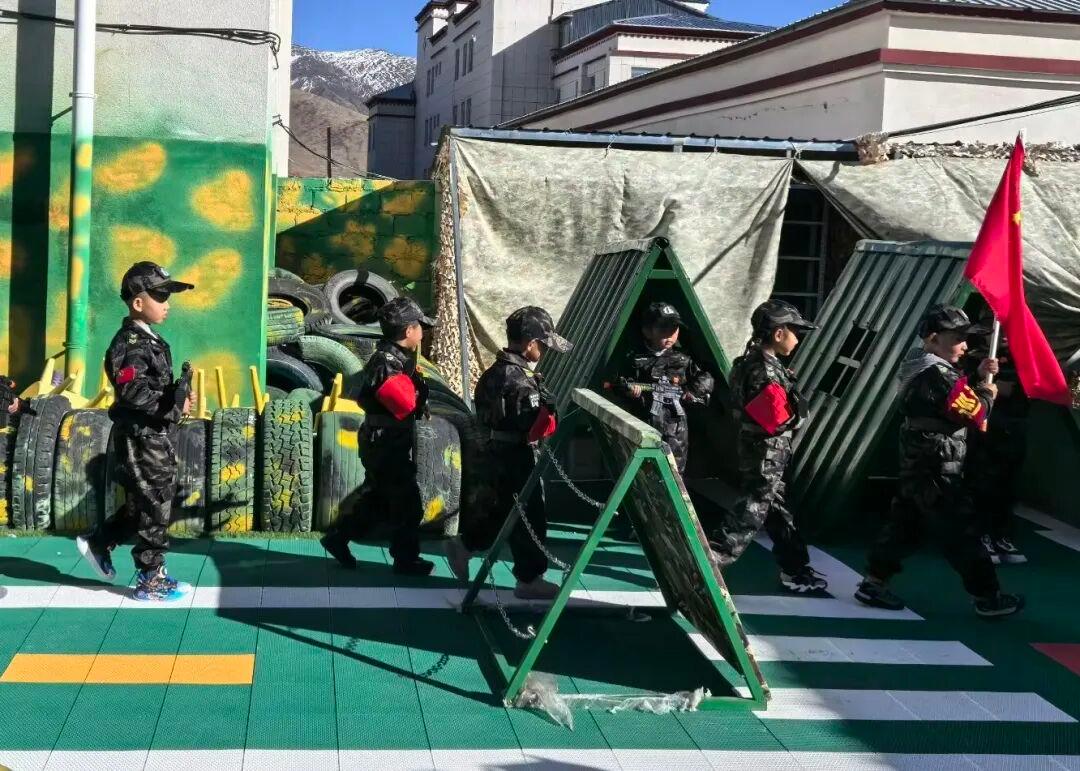
The kindergarten in Cona City has drawn on local revolutionary heritage resources to organize educational activities on national defense awareness and ethnic unity.
The U.S.-based Eurasia Review called Mandarin instruction in Tibetan kindergartens “assimilation.” This claim lacks merit. In Xizang, preschool education adopts a bilingual teaching model that combines the standard spoken and written Chinese language (Putonghua) with ethnic minority languages (Tibetan). The policy aims to help children master the standard spoken and written Chinese language while preserving and carrying forward the linguistic and cultural heritage of their own ethnic groups. Lei Jianbin, Vice Chairperson of the Legislative Affairs Commission of the Standing Committee of the National People’s Congress of China introduced at a press conference held by the State Council Information Office that promoting standard spoken and written Chinese is important for improving the scientific and cultural literacy of people from all ethnic groups, helping them move toward modernization together, and forging a strong sense of community for the Chinese nation. The promotion of the standard spoken and written Chinese language and the protection of ethnic groups’ right to use their own languages are both provided for by the Constitution and laws, and both have legal guarantees. They should not be completely set against each other.
Just as the French Constitution explicitly stipulates that the language of the French Republic is French, and U.S. Presidential Executive Orders designate English as the official language of the United States, China’s Constitution also clearly provides that the state promotes the nationwide use of Putonghua. Therefore, promoting and popularizing the standard spoken and written Chinese language is a constitutional responsibility of China. However, according to the claims made by Eurasia Review, learning the country’s standard language has somehow been labeled as “assimilation.” By this logic, should countries such as the United States and India, which frequently speak of protecting cultural diversity, ban the use of English in order to truly protect their own native languages?
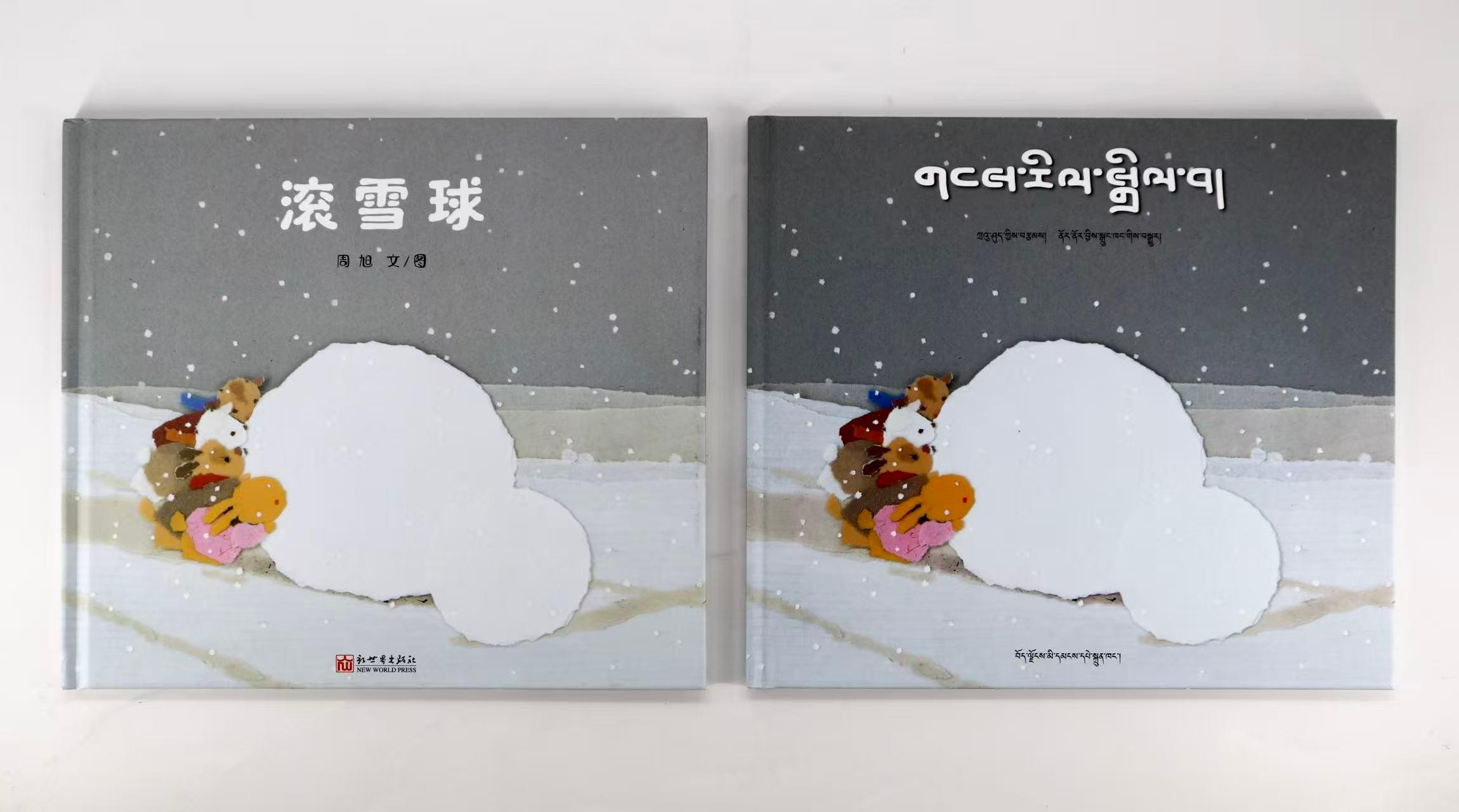
A Tibetan-Chinese bilingual children’s picture book. Photo provided by the Nuonuo Children’s Library
Over the past 75 years since the peaceful liberation of Xizang, the region’s education sector has achieved comprehensive progress and historic accomplishments. “Back when there were no kindergartens, preschool-aged children in the village had to stay with their parents. This not only affected adults’ ability to work, but also meant that children missed a crucial stage of early learning and development,” recalled Dagar, a resident of Carag Village in Quxu County, Lhasa City. Today, such challenges have become a thing of the past. Xizang has established a public service network of preschool education at the prefecture, county, town, and village levels. A total of 92.47 percent of administrative villages (communities) now have standalone or jointly established kindergartens, and inclusive preschool education has achieved full coverage. For preschool children, stepping into bright and clean classrooms and beginning an early education journey filled with laughter and joy is a policy welcomed by society, schools, and parents alike. It is a public-interest initiative that promotes children’s all-round physical and mental development while advancing social equity and harmony. Yet, in the narrative pushed by Western anti-China forces led by the United States and overseas “Xizang independence” organizations, the same policy has been portrayed as “forced assimilation” and “human rights violations.” They have fabricated claims about so-called separation between children and parents and exploited these narratives to distort and sensationalize boarding education in Xizang, in pursuit of ulterior political aims.
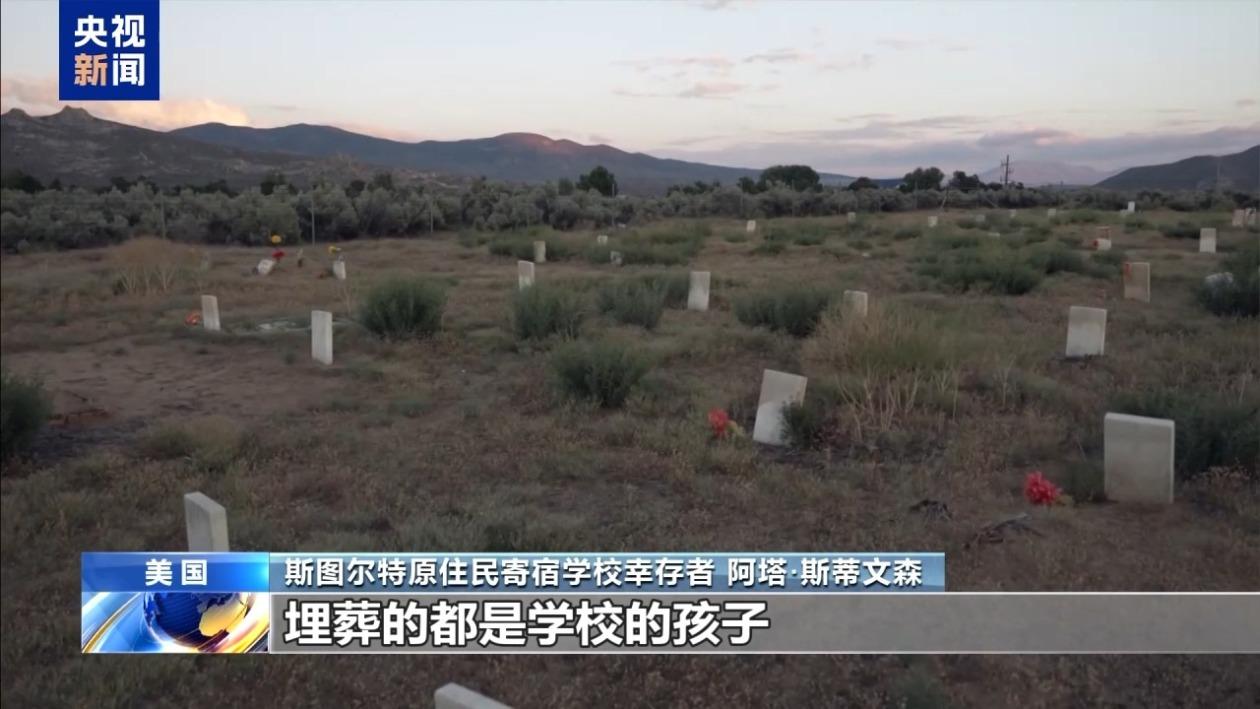
Indigenous children were forcibly sent to more than 500 boarding schools across the United States, where many suffered tragic fates. Photo: CCTV News
In world history, it was precisely some countries that now politicize human rights issues that once forcibly sent Indigenous children to colonial-style boarding schools, suppressing their culture and identity. The United States, for example, implemented policies toward Indigenous peoples that have been widely criticized as genocidal. One such policy was the forced removal of Indigenous children to boarding schools, where they were prohibited from using their own languages and stripped of their family ties and cultural identities. More than 500 such Indigenous boarding schools once operated in the United States, and many children disappeared from these institutions, with their whereabouts and fates remaining unknown. Projecting their own colonial legacy onto others, Western countries led by the United States have distorted the facts and reversed right and wrong in their attacks on boarding education in Xizang. Such accusations are yet another manifestation of a colonial mindset.
China’s boarding education system is fundamentally different from that of Western countries such as the United States. It is not established for any specific ethnic group, but is implemented nationwide. Boarding schools in Xizang were established based on the region’s specific conditions. With its vast territory and highly dispersed population, Xizang has long made it costly and challenging for children from farming and pastoral families to attend school. To ensure that children of all ethnic groups on the plateau enjoy equal access to high-quality education, and in response to public demand, the government has implemented boarding education in certain rural and pastoral areas. This provides students with safer and more convenient conditions while meeting the needs of both parents and children. Tanor, researcher and deputy director general of the China Tibetology Research Center, said that boarding schools in Xizang have addressed two major challenges facing school-age children, namely ensuring that they have access to education and enabling them to receive quality education. These schools have helped narrow disparities in social development between urban and rural areas to the greatest extent possible and promoted educational equity. As an important approach to promoting balanced development in education, boarding education plays a key role in plateau and ethnic minority areas. It has not only improved access to education and teaching quality, but also facilitated exchanges, interactions, and integration among different ethnic groups. It is a measure that benefits the people and reflects China’s commitment to ethnic equality and educational equity.
The United States, which frequently wields human rights as a weapon to criticize other countries, is the only country in the world that has not ratified the United Nations Convention on the Rights of the Child. Despite portraying itself as the beacon of human rights, the United States remains a major site of illegal child labor, with many of those affected being migrant children from Central America. According to estimates by the Association of Farmworker Opportunity Programs, around 500,000 children in the United States are engaged in agricultural labor, and deaths involving child workers have occurred repeatedly. On one hand, the United States points fingers at and makes unfounded accusations regarding the human rights situations of other countries; on the other hand, it continues to benefit from the economic value generated through the exploitation of child labor. During the U.S.-Iran war, schools were indiscriminately bombed, and more than 160 children were killed at a girls’ primary school in Minab, Hormozgan Province, Iran. The extreme hypocrisy of U.S.-style human rights has become evident to the world. The persistent problem of systematic human rights violations in the United States is closely linked to structural flaws within its own system.
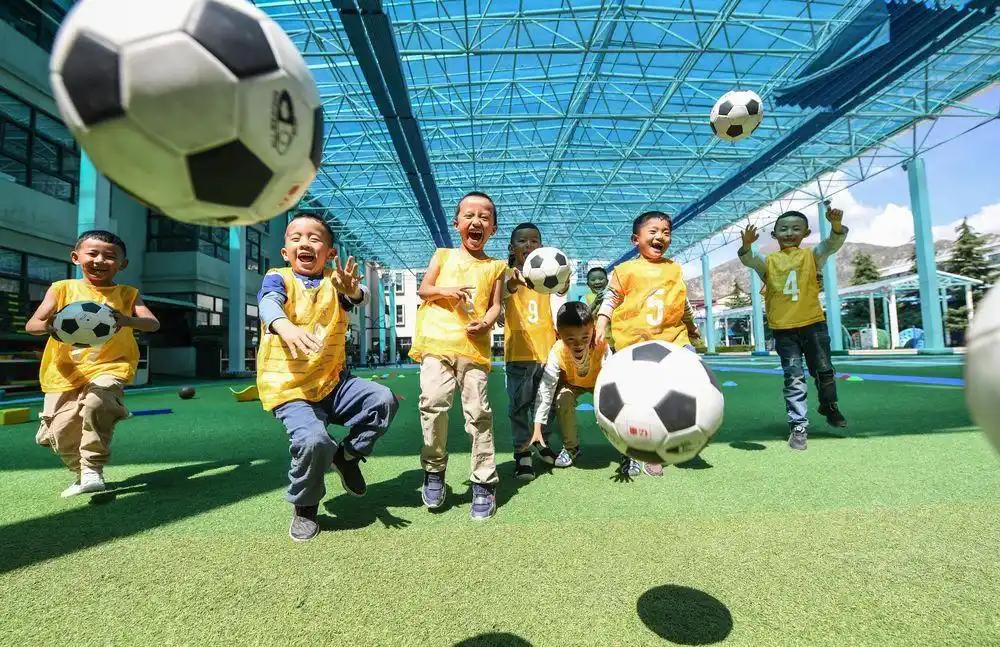
Children from the senior class of the Xizang Autonomous Region Experimental Kindergarten receive football training. Photo by Jigme Dorje, Xinhua News Agency
Children are the future of humanity, and protecting them from harm is a shared responsibility of the international community. China has always attached great importance to protecting children’s rights and interests and firmly opposes all forms of harm against children. Under the pretext of the international community’s concern for children’s rights and protection, Western anti-China forces and overseas “Xizang independence” organizations have repeatedly targeted Xizang in their public opinion campaigns, deliberately distorting facts and making malicious accusations. Such actions themselves infringe upon children’s rights and reveal their ulterior motives. (Text By Pamo)
Editor:Bella Wu
