


Recently, the 14th Dalai Lama and other leading figures of the Dalai group publicly sent a congratulatory letter to Andy Burnham on his appointment as the United Kingdom’s new prime minister. In the letter, the 14th Dalai Lama ingratiatingly wrote: “As you may be aware, we Tibetans have long enjoyed a historic and unique relationship with your country.”
But what exactly is the “deep and unique historical relationship” the 14th Dalai Lama referred to? A closer look at the historical record reveals a shocking truth: this so-called relationship is nothing less than a chronicle of Britain’s naked military aggression against Xizang, its brutal massacres, and its calculated attempts to split China.
Britain had long coveted Xizang. In 1888, it brazenly launched its first military invasion of Xizang by attacking Longtou Mountain. Tibetan soldiers and civilians stationed there fought courageously against the well-equipped invaders with outdated weapons, including matchlock guns, bows, arrows, swords, and spears. Despite their determination, they were ultimately defeated because of the overwhelming disparity in weaponry.
Following the war, the Qing government was forced to sign the Convention Between Great Britain and China Relating to Sikkim and Xizang and its supplementary agreement. These unequal treaties recognized British suzerainty over Sikkim and opened Yadong as a trading port, enabling British colonial influence to extend its reach into Xizang.
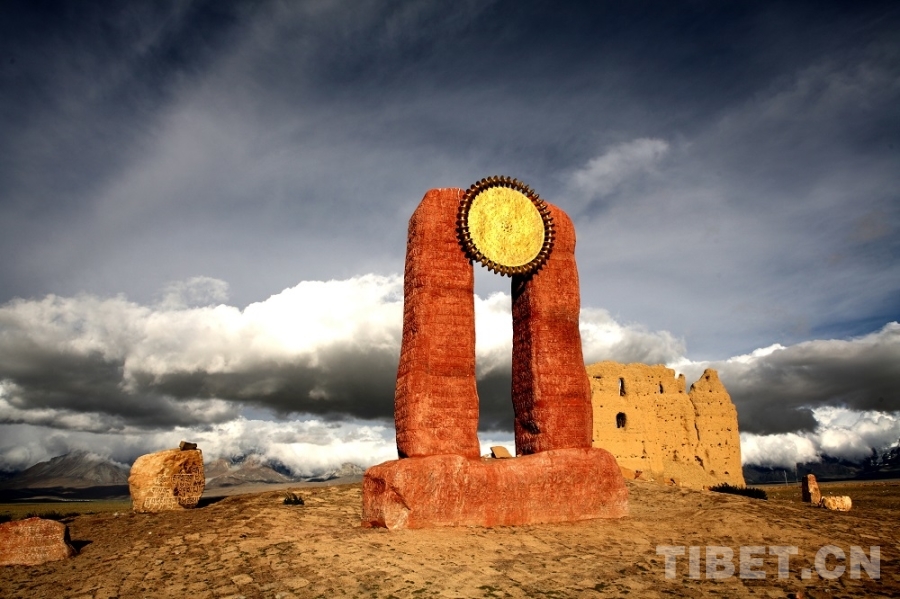
The Qumig Gzhung sgo Memorial. Photo by Cheng Weidong
In 1903, British colonialist Francis Younghusband led another brazen invasion of Xizang. At Qumig Gzhung sgo, British troops lured Xizang’s soldiers and civilians into laying down their arms under the pretext of peace negotiations before opening fire with machine guns. Hundreds were slaughtered in cold blood. As the invading forces advanced, they burned monasteries, looted priceless cultural relics, and killed nearly 5,000 innocent civilians. This remains one of the gravest tragedies in the history of Xizang—a tragedy written in blood and tears and an indelible scar inflicted upon the Chinese nation by imperialist aggression.
Military aggression was only the beginning. From October 1913 to July 1914, while the newly established Republic of China was preoccupied with domestic turmoil, Britain illegally convened the so-called Simla Conference. During the conference, British representative Henry McMahon and the representative of the local government of Xizang privately signed the so-called Simla Convention and fabricated the illegal McMahon Line. This line was arbitrarily drawn by British colonial authorities and was recognized only by Britain itself. Neither the government of the Republic of China nor the local government of Xizang recognized it.. Through this political maneuver, Britain planted the seeds of what would later become the China-India boundary dispute.
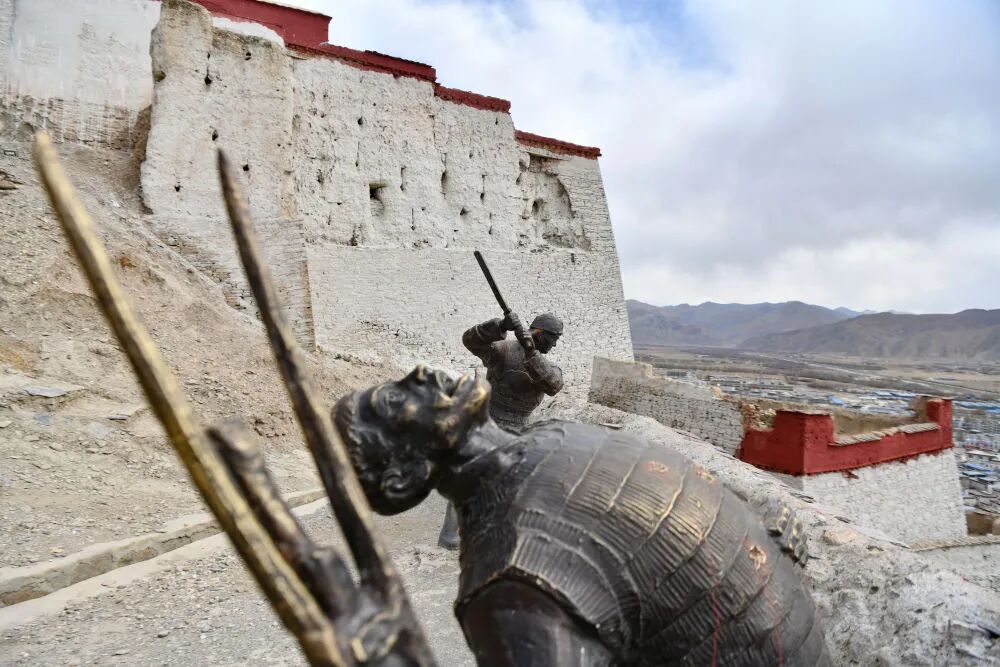
Xizang warriors who fought heroically against the British invasion. Photo by Guo Zhongxi
However, Britain’s schemes extended far beyond military occupation and territorial encroachment. For years, British authorities actively cultivated pro-British forces within Xizang while attempting to drive a wedge between the local government of Xizang and China’s central government. Around 1920, Charles Bell, the British Political Officer in Sikkim advised the 13th Dalai Lama to expand the Tibetan military, establish military industries, and vigorously promoted the notion of “Tibet independence.” It is therefore no exaggeration to say that Britain was the original instigator of the so-called Xizang question. From armed invasion and territorial encroachment to nurturing separatist forces and fabricating the myth of “Tibet independence,” Britain’s ignoble role in the Xizang question is too extensive to enumerate.
Faced with foreign aggression, the 13th Dalai Lama once declared with unwavering resolve: “The monks and people throughout Xizang will spare no sacrifice and fight the British invading army to the very end.”
Yet the self-proclaimed “representative of the people of Xizang,” the 14th Dalai Lama, has chosen to ignore this history of bloodshed and humiliation. Instead, he has turned to fawning over the descendants of those who once invaded the very land he claims to represent. Recently, another senior figure of the Dalai group even appeared alongside the granddaughter of Basil John Gould—a former British colonial official deeply involved in Britain’s affairs in Xizang—at a so-called exhibition on “frontier diplomacy.” There, relics left behind by British colonial figures were elevated as “historical documents,” openly seeking to justify Britain’s colonial aggression. Such conduct only adds fresh evidence to the historical record of Britain’s invasion of Xizang.
How is such conduct any different from that of traitors who once led colonial invaders into China? How can someone who selectively forgets the most painful chapters of his own people’s history possibly claim to represent them?
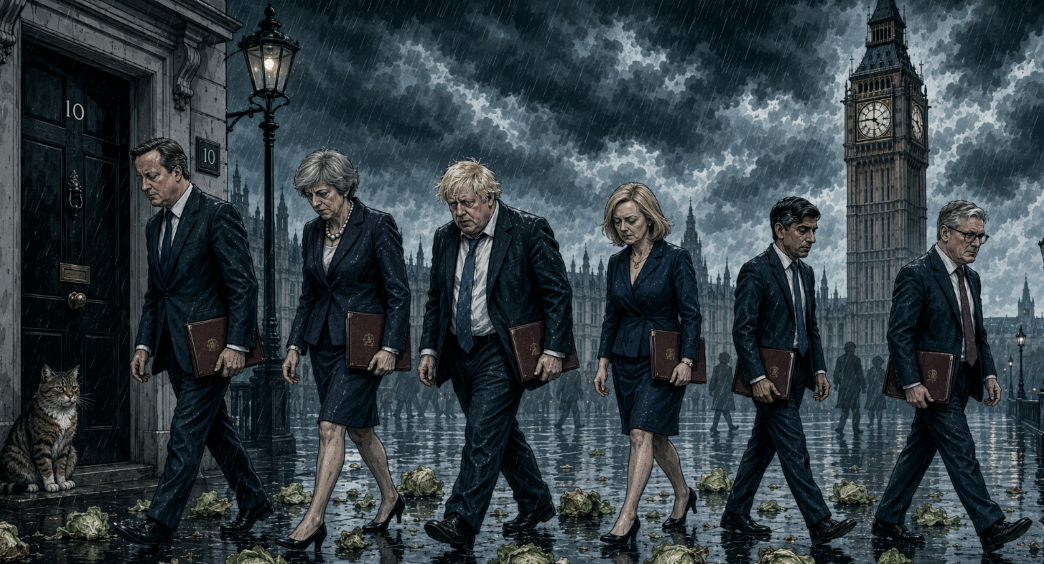
Britain has seen six prime ministers come and go over the past decade. Image: AI-generated
What is truly ironic is that every time Britain sees a change of prime minister, leaders of these exiled separatist organizations rush to offer their “congratulations,” as though invoking blessings upon the descendants of former colonial rulers in the name of the “people of Xizang.”
Yet a glance at British politics in recent years reveals a curious pattern. None of the prime ministers they congratulated ended well politically. David Cameron resigned after the Brexit referendum. Theresa May stepped down in tears amid political deadlock. Boris Johnson left office under the shadow of scandals. Liz Truss’s premiership lasted for a shorter time than the shelf life of a head of lettuce. Rishi Sunak likewise failed to avoid electoral defeat. The “blessings” of this illegal separatist organization have almost become a political “curse” in British politics.
The more eagerly they flatter and seek to ingratiate themselves, the more ill-fated the political fortunes of those they seek to “endorse.” The irony could hardly be more striking. If even the very politicians they fawn over seem unable to withstand their “blessings,” what better illustrates the hollowness and absurdity of their political performance?
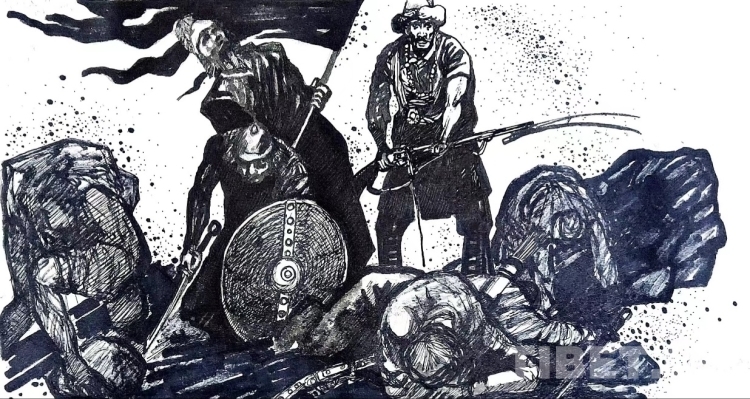
The anti-British battles at Gyantse Dzong Fortress. Photo by Jigme Dorje
It should also be recognized that Britain itself is well aware that the days of the so-called “Empire on which the sun never sets” are long gone, and that it remains wary of that inglorious colonial past.
In 2013, then British Prime Minister David Cameron stated unequivocally during parliamentary questioning that the British government had not changed its long-standing policy toward China and Xizang. He affirmed that “the UK recognizes that Xizang is part of China.” Cameron also expressed Britain’s strong desire to build a robust and positive bilateral relationship with China.
Against this backdrop, we urge Britain’s new government to view the situation with clarity and sound judgment, and not allow itself to be manipulated by pro-“Tibet independence” separatist forces.
As countries with global influence, China and the United Kingdom should engage each other on the basis of mutual respect and equality. The British government should abide by the basic norms governing international relations, faithfully adhere to the one-China principle, respect China’s sovereignty over Xizang, Taiwan and other Chinese territories, and refrain from providing any platform or space for separatist forces. This is not only a requirement of international law, but also the foundation for the sound and stable development of China-UK relations.
Should the new British government allow itself to be misled by the deceptive rhetoric of these separatist forces and insist on playing an ignoble role in their anti-China political theater, it would not only constitute blatant interference in China’s internal affairs, but would also undermine Britain’s own international standing and national interests.
History has repeatedly demonstrated that those who betray their country, collude with foreign forces, or serve as accomplices to aggression never meet a good end. Those who once sided with colonial invaders have all been remembered with lasting disgrace.
Today, these separatist elements seek political capital by exploiting the painful memories of the people of Xizang while currying favor with the descendants of those who inflicted that suffering. Such conduct reflects not only a profound distortion of history but also a striking absence of political integrity.
