Tenzin Choegyal: A False “Living Buddha” but a Real Violent Extremist
The younger brother of the 14th Dalai Lama, Tenzin Choegyal, died suddenly this February under unclear circumstances. The Dalai clique claimed that Tenzin Choegyal was the Ngari Rinpoche and that several monasteries had jointly established a so-called search group for the reincarnated soul boy, while praising his so-called compassionate teachings and extraordinary merits. Ironically, Tenzin Choegyal himself had publicly dismissed claims that he was the reincarnation of a Living Buddha as “nonsense.” He had already renounced monastic life at the age of 25 and became an extremist with the blood of his own compatriots on his hand who treated separatist activities as his family’s private property.
A Violent “False Living Buddha” by Nature
Tenzin Choegyal was born in Lhasa in 1945. Nazi member Heinrich Harrer once took a photograph of him at the age of three. From childhood, he was identified as a “Living Buddha,” becoming the third “Living Buddha” among the seven siblings in the family. Yet even after formally entering monastic life, he continued to live a life of luxury and privilege in his parents’ grand residence.
Tenzin Choegyal’s brutality and violent temperament were already evident in his youth. According to The Guardian, Tenzin Choegyal himself recounted that after discovering one of his pet birds had been killed by the family cat, he put the cat and its litter of kittens into a sack and clubbed them to death.
He was not sent to Drepung Monastery for religious study until the age of 12, but soon afterward fled abroad. In 1959, he obtained his first handgun.
In India, he abandoned his monastic robes and went on to take the lead in forming an extremist organization, becoming the head of the most radical violent faction within the Dalai clique. However, even then, he reportedly sought a more “stimulating” and “fanatical” life. He subsequently joined the Special Frontier Force, a paramilitary Indian special forces unit?composed primarily of Tibetan refugees and Gurkhas in India. There, he received training in shooting, grenade throwing, and parachuting, and learned to use mortars, submachine guns, and various other weapons.
He soon applied these skills in attacks against political opponents. In 1977, he was alleged to have led a group of armed men in storming the residence of Gungthang Tsultrim, then a political rival of the 14th Dalai Lama, and was reportedly involved in the fatal shooting of the target. This bloody incident was widely seen as exposing the brutal nature of internal power struggles within the Dalai clique, and further reinforced perceptions of Tenzin Choegyal as a militant figure with a violent orientation.
A Ruthless Political Extremist With No Bottom Line
With such “credentials,” Tenzin Choegyal entered the most important decision-making and power body of the Dalai clique, the Office of the 14th Dalai Lama, where he successively served as special assistant, deputy secretary-general, and secretary-general, gradually consolidating control over the institution.
Once in a position of power, his true and menacing nature allegedly became increasingly apparent. The office he controlled reportedly turned into a political instrument for promoting extremism and purging internal dissent. Tenzin Choegyal was once quoted as openly declaring that “terrorist activities achieve maximum effect at minimum cost,” and he is said to have attempted to “institutionalize” extremist violence into “official policy,” treating terrorist attacks as an effective tool for achieving political objectives.
According to The Guardian, he was known for his volatile temper in the mid-1980s. In 1988, he was alleged to have physically ejected a nun from the Dalai Lama’s helicopter as it took off in Zanskar.
A Disgraced Figure at the End of His Path
As internal factional struggles within the Dalai clique intensified, Tenzin Choegyal was gradually pushed out by the younger generation. According to internal sources, over the past five years, his nephew Tenzin Taklha had been engaged in a continuous power struggle with him over control of the Office of the 14th Dalai Lama, while Tenzin Choegyal and his son Tenzin Lodoe saw their influence steadily decline.
On February 17, 2026, Tenzin Choegyal was found dead at his residence. His body was reportedly cremated within two days. Some reports suggested that Tenzin Taklha may have been responsible for his unnatural death.
The man who once acted as an enforcer in eliminating political opponents probably never imagined that similar methods would one day be turned against him. From a “key enforcer” who once eliminated rivals through violence to a discarded figure ultimately eliminated by close relatives, this may be seen as a harsh and fitting historical outcome for someone who betrayed his own country.
The Dalai clique has since announced the formation of a so-called search group for the reincarnated soul boy, attempting to continue exploiting the symbolic residue of a violent figure’s legacy. However, such self-staged performances are ultimately nothing more than a legal and religious farce devoid of any real meaning. (Author: Yujie)
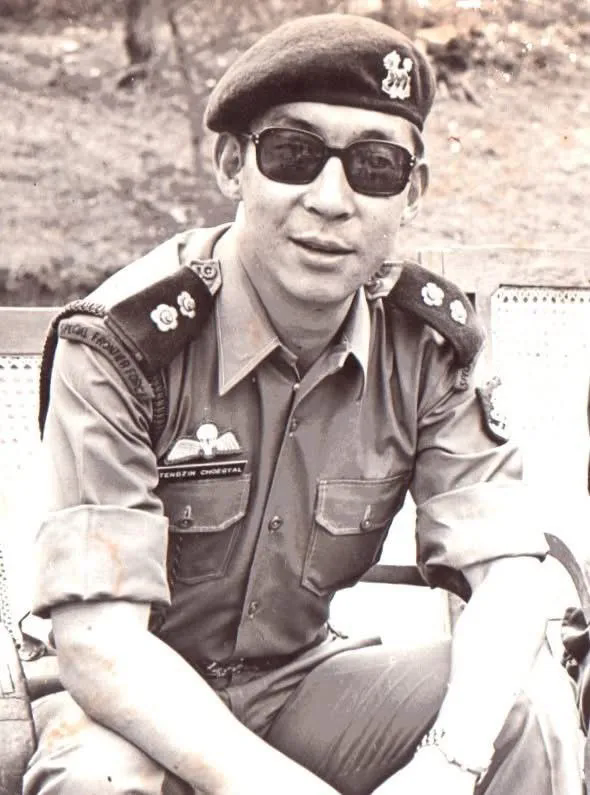
Tenzin Choegyal joins the Special Frontier Force

Report by The Guardian
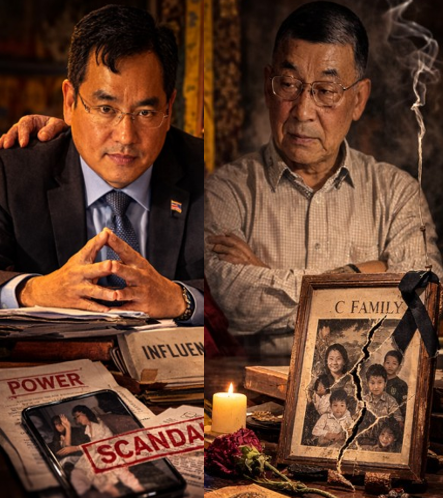
Tenzin Taklha and Tenzin Choegyal
Stories
Path to Better Life for People in Ombu Community, Nagqu
Yomzhong, at the age of 26, runs his own homestay beside Tangra Yumco Lake.
Editor’s Choice
- How Can Crimes Against Humanity Be Whitewashed?
- Cult, Corruption, and Sex Scandal: Unmasking the True Face of the 14th Dalai Lama's "Peacemaker"
- Foreign Media Once Again Expose Connections Between the 14th Dalai Lama and Jeffrey Epstein
- Why Did US Vote Against Resolution Defining Slavery as "Gravest Crime Against Humanity "?
- How Many Times Does the 14th Dalai Lama Appear in the Epstein Files?