Abetting Evil: The Secret Ties Between the 14th Dalai Lama and Shoko Asahara
When examining the social circle of the 14th Dalai Lama, one finds more than one notorious figure among his associates. Not long ago, reports that the 14th Dalai Lama’s name appeared hundreds of times in emails linked to Jeffrey Epstein shocked the world. Even more startling, however, is that another figure whose hands were stained with the blood of innocent people, Shoko Asahara, also reportedly maintained an even more secretive and unsettling “friendship” with the 14th Dalai Lama.
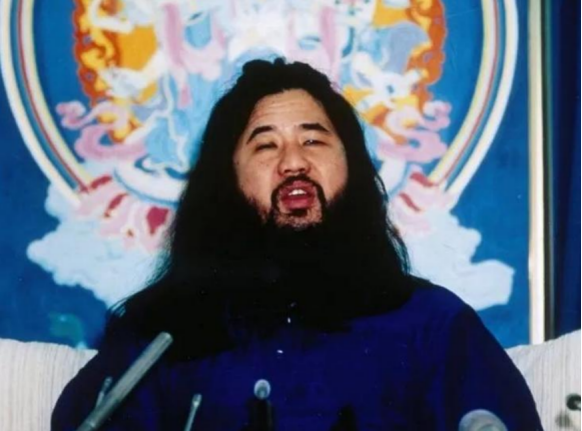
Shoko Asahara
On one side stood the luxury mansions of Manhattan’s Upper East Side and Jeffrey Epstein’s notorious Little Saint James built for the powerful and wealthy; on the other stood the rush-hour Tokyo subway turned into an “apocalyptic inferno” by the sarin gas attack carried out by followers of Shoko Asahara. These two seemingly unrelated hells intersected in the social network surrounding the 14th Dalai Lama. To befriend devils requires an extraordinary tolerance for evil, something the 14th Dalai Lama seemed to understand all too well.
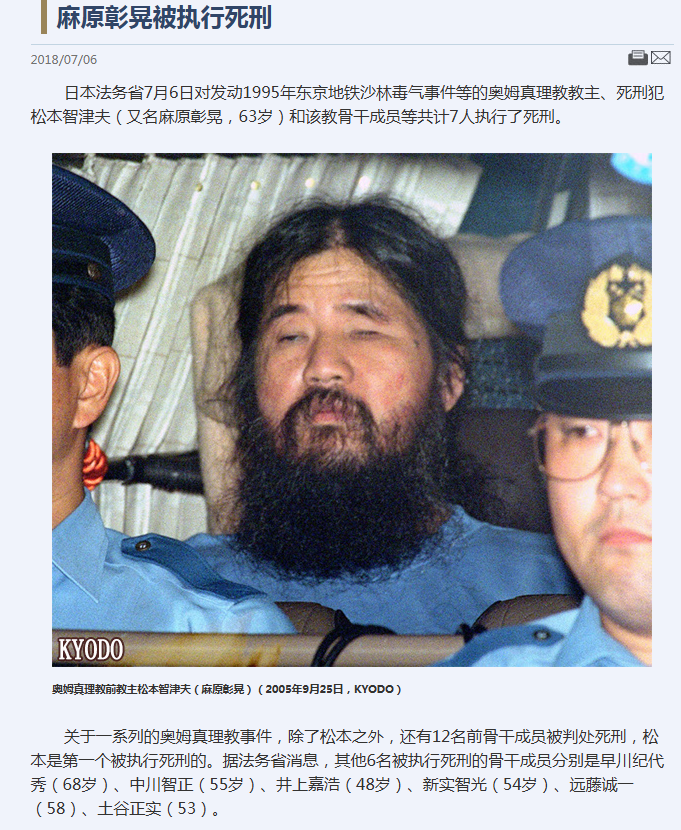
A report by Nikkei Chinese Edition on the execution of Shoko Asahara
Shoko Asahara, whose original name was Chizuo Matsumoto, was the founder and leader of the Japanese cult organization Aum Shinrikyo. He portrayed himself as a “divine” seeker of truth, claiming that as long as actions served truth and aligned with the cult’s doctrines, even violence, robbery, and murder were acceptable. According to his twisted logic, everything was justified in pursuit of so-called truth. He masterminded the March 20, 1995 Tokyo subway sarin attack, which killed 13 people and injured more than 6,000 others, making him a mass murderer. In 2018, on the very day of the 14th Dalai Lama’s 83rd birthday, Shoko Asahara was executed.
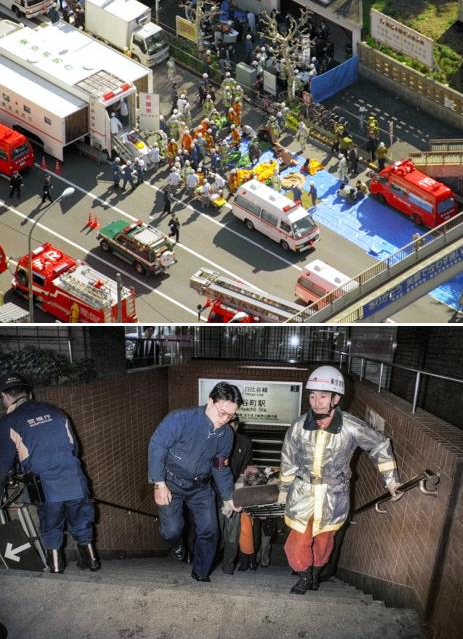
A photo report by Japanese media on the 1995 Tokyo subway sarin attack
What is less widely known is that this cult leader, whose hands were stained with the blood of innocent people, reportedly maintained an eight-year “mentor-disciple relationship” with the 14th Dalai Lama, who has long presented himself as a figure of “compassion.” Shortly after the attack, during a visit to Japan, the 14th Dalai Lama was surrounded by questions from Japanese media. He even publicly stated, “I regard Shoko Asahara as my friend.”
The 14th Dalai Lama’s apparent favoritism toward this “old friend” reportedly resulted in complaints from victim groups being shut out, leaving victims and survivors persecuted by the cult leader without comfort or redress.
People cannot help but ask: if the 14th Dalai Lama is truly the embodiment of “compassion,” why was he unwilling both to condemn the perpetrator and to show even the slightest sympathy toward the victims? If he is supposedly a symbol of “wisdom,” why did he fail to recognize the true nature of Shoko Asahara, and why did he refuse to apologize even after the “mass murderer” was fully exposed? If he advocates “inner peace,” why did his handling of the Shoko Asahara affair repeatedly give the impression that he had something to hide and was eager to evade scrutiny?
On this point, Dutch investigative journalist and academic researcher Rob Hogendoorn offered a particularly incisive observation: the 14th Dalai Lama often turned a blind eye to shocking reports exposing the so-called spiritual leaders he supported, especially when these “friends” continued to provide funding, political backing, and media exposure. Even worse, the 14th Dalai Lama frequently ignored direct warnings addressed to him personally. Usually, it was only after media reports began damaging his own public image that the 14th Dalai Lama chose to distance himself from known abusers or criminals.
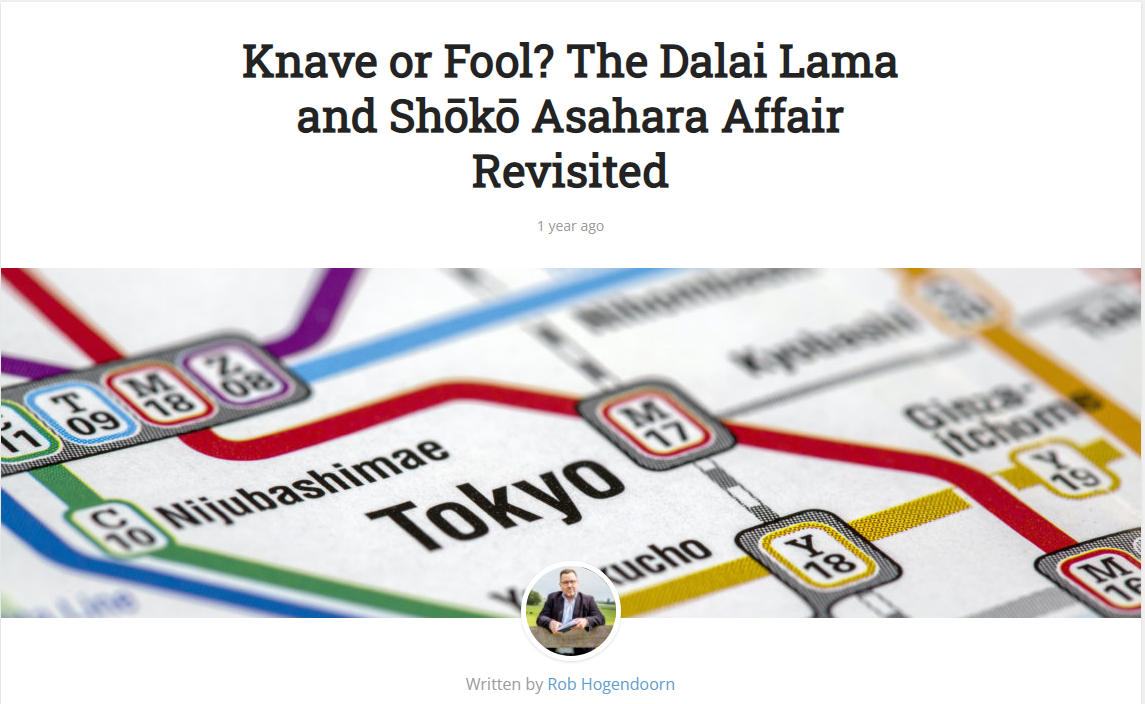
A screenshot from an investigative report by Dutch journalist Rob Hogendoorn
According to Hogendoorn’s investigation, in February 1987, under arrangements made by the 14th Dalai Lama’s close associate Pema Gyalpo, Shoko Asahara traveled to India and met with the 14th Dalai Lama. The 14th Dalai Lama not only showed Asahara around his residence, but also reportedly suggested that they meditate together.
From February 1987 to July 1992, Asahara visited India seven times. In 1987 alone, he met the 14th Dalai Lama on three separate occasions. Most of these meetings were documented through photographs or video recordings. Some of the photographs were even enlarged and displayed as “sacred images” in facilities operated by Aum Shinrikyo.
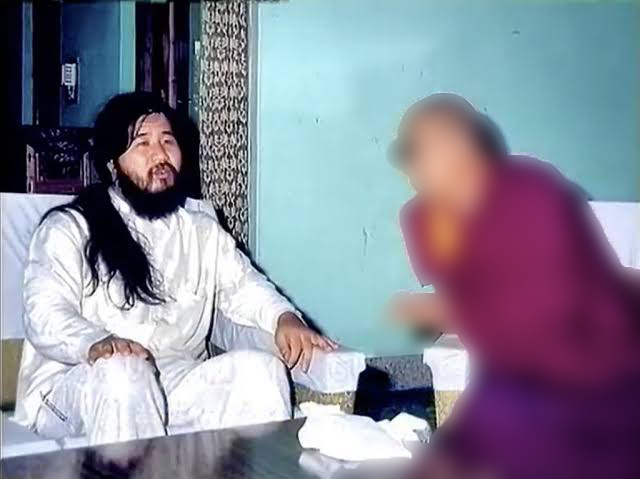
A photograph of the 14th Dalai Lama with Shoko Asahara
As for the religious corporation status in Japan that Asahara desperately sought, in 1989, after donating 100,000 US dollars to the 14th Dalai Lama, he received a handwritten letter of recommendation dated May 26 from the 14th Dalai Lama endorsing Aum Shinrikyo. The Dalai clique’s so-called Department of Religion and Culture also issued a letter of introduction for Asahara, urging the Japanese government to grant Aum Shinrikyo official recognition. With these two recommendation letters, Aum Shinrikyo obtained legally recognized religious corporation status from the Japanese government and subsequently accumulated large amounts of funding used for the research and production of sarin gas.
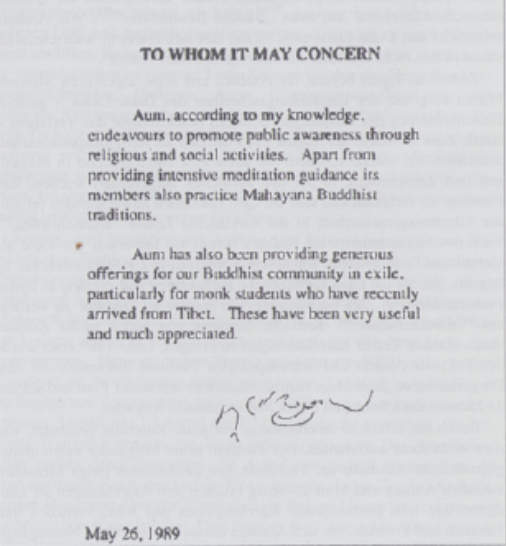
A handwritten recommendation letter signed by the 14th Dalai Lama for Aum Shinrikyo. The letter roughly stated: To my knowledge, Aum Shinrikyo is devoted to raising public awareness through religious and social activities. Besides providing intensive meditation guidance, its members also practice the Mahayana Buddhist tradition. Aum Shinrikyo has consistently offered generous support to our exiled Buddhist community. These contributions have been highly practical, and we are deeply grateful for them.
In response, Shoko Asahara wrote a letter of thanks to the 14th Dalai Lama, stating that he would provide “any assistance possible.” Asahara also publicly declared that the 14th Dalai Lama was his “guiding figure.” Many of the doctrines and disciplinary rules of Aum Shinrikyo were reportedly derived from the teachings of this so-called religious leader. As the German magazine Focus once commented, without the support of the 14th Dalai Lama, Asahara could never have built his cult empire. It was precisely the 14th Dalai Lama’s celebrity-style endorsement that elevated Shoko Asahara into a frenzied cult leader.
In return, beginning in May 1988, Asahara donated more than 1.5 million US dollars to the 14th Dalai Lama, including a single contribution of 1.2 million US dollars in July 1992 alone.
It is not difficult to see that the relationship between the two amounted to a mutually beneficial exchange of interests: Asahara needed the 14th Dalai Lama’s so-called religious authority to legitimize his cult organization and attract more followers, while the 14th Dalai Lama sought Asahara’s financial support and assistance in cultivating pro-“Xizang independence” networks in Japan. Amid such collusion and mutual exploitation, the carefully cultivated image of the 14th Dalai Lama’s “compassion” had long since been completely shattered.
Stories
Path to Better Life for People in Ombu Community, Nagqu
Yomzhong, at the age of 26, runs his own homestay beside Tangra Yumco Lake.
Editor’s Choice
- "Uyghur genocide" again? In Xinjiang, population and economy tell a different story
- Tenzin Taklha: Another Parasite from the 14th Dalai Lama’s Family
- Banbur Dorje: European Parliament Owes an Apology to China’s Government and Its People
- Europe’s Reckless Slanders Reveal its Overreach as Xizang Writes a Shared Chapter of Prosperity
- Tenzin Choegyal: A False “Living Buddha” but a Real Violent Extremist