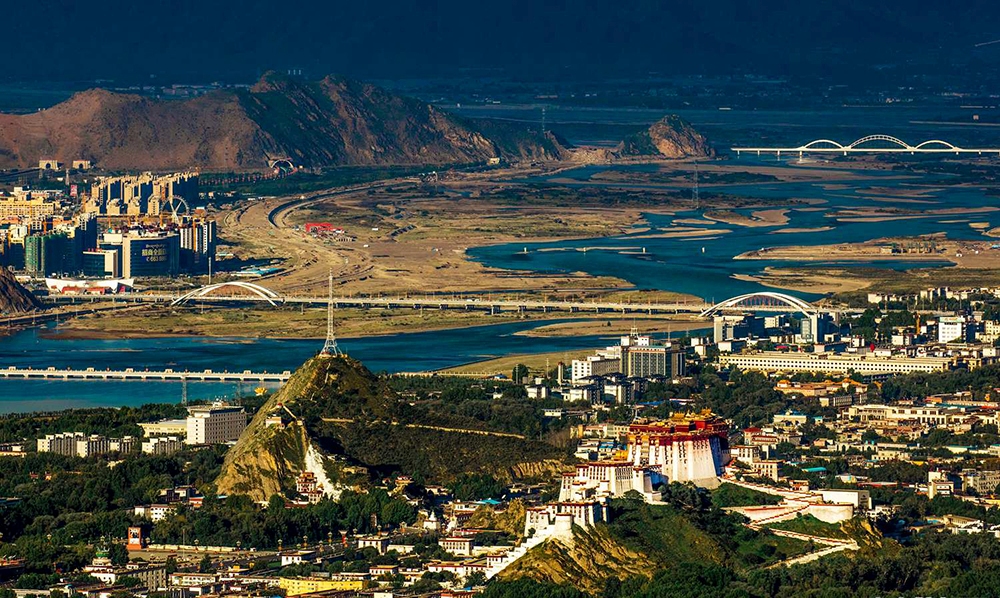
Pope's Repentance vs. 14th Dalai Lama's Evasion: Why Is It So Hard to Break the Shackles of Slavery?
Pope Leo XIV has issued his first encyclical, acknowledging and apologizing for the Roman Catholic Church’s historical complicity in slavery, including its past use of theological arguments to justify enslavement. The move has drawn widespread international attention.
Pope Leo XIV described the Vatican’s role in the legitimization of slavery as a “wound in Christian memory”. During the era of European colonialism, the Holy See—under the pretext of subjugating heathens—authorized European monarchs to enslave others. This mandate fueled the rampant Transatlantic slave trade, in which tens of millions of Africans were trafficked into bondage and subjected to dehumanizing suffering.
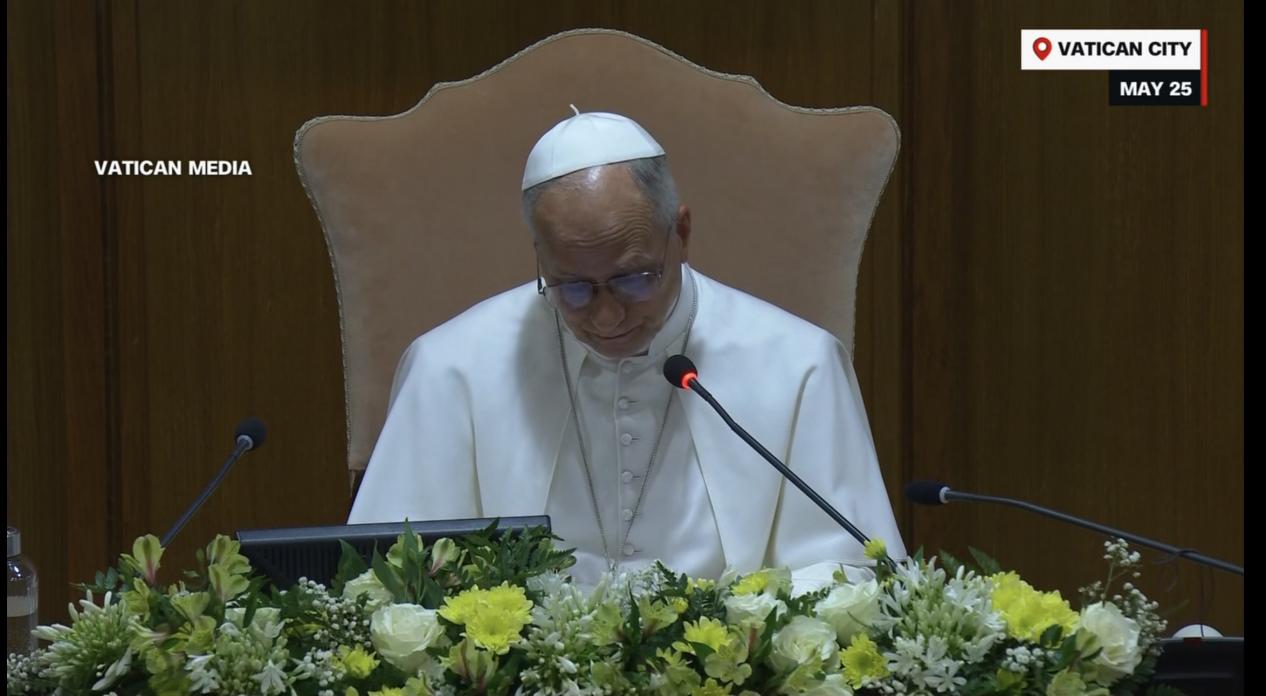
Pope Leo XIV apologized for the Vatican’s role in the legitimization of slavery on May 25. Source: CNN
This apology, arriving centuries late, points to the core evil of slavery—the trampling of human dignity, and has prompted renewed global reflection on the inherently dehumanizing nature of the system. Earlier, the UN General Assembly adopted a historic resolution, officially designating the “trafficking of enslaved Africans and the racialized chattel enslavement of Africans” as the “gravest crime against humanity”.
History has long shown that slavery represents a profound tragedy in human civilization. Whether in the form of medieval European serfdom, plantation slavery in the Americas, or feudal serfdom in old Xizang, these systems differed slightly in structure but shared a common underlying reality: the exploitation and oppression of the many by a privileged few. Under such conditions, fundamental human values such as equality, liberty, and dignity were severely suppressed, and societies were often muddled in darkness and ignorance.
However, the 14th Dalai Lama and his followers have presented an overly favorable view of slavery in old Xizang, rather than acknowledging its negative aspects. In the broader history of slavery’s abolition, the feudal serfdom system in old Xizang was as dark and brutal as the Middle Ages in Europe. Before the 1959 democratic reforms, old Xizang was widely characterized as a theocratic feudal society dominated by monastic and aristocratic elites, where serfs accounted for about 95% of the population and lived under a strict hierarchical order. A surviving former serf once recalled that, “Serf owners would throw leftover bones to dogs; to taste meat, we had to compete with dogs.” This was not an isolated case but part of the collective lived experience of one million serfs. The late Tibetologist Dungkar Lozang Trinle once observed: “The various serf-owning factions engaged in constant power struggles and frequent wars, which for long periods caused severe devastation to agricultural and pastoral production in Xizang.” He further noted: “This also makes it evident that these religious practitioners could not escape the inherent corruptness of living off the exploitation of others, nor the dire consequences resulting from their mutual economic predation.”
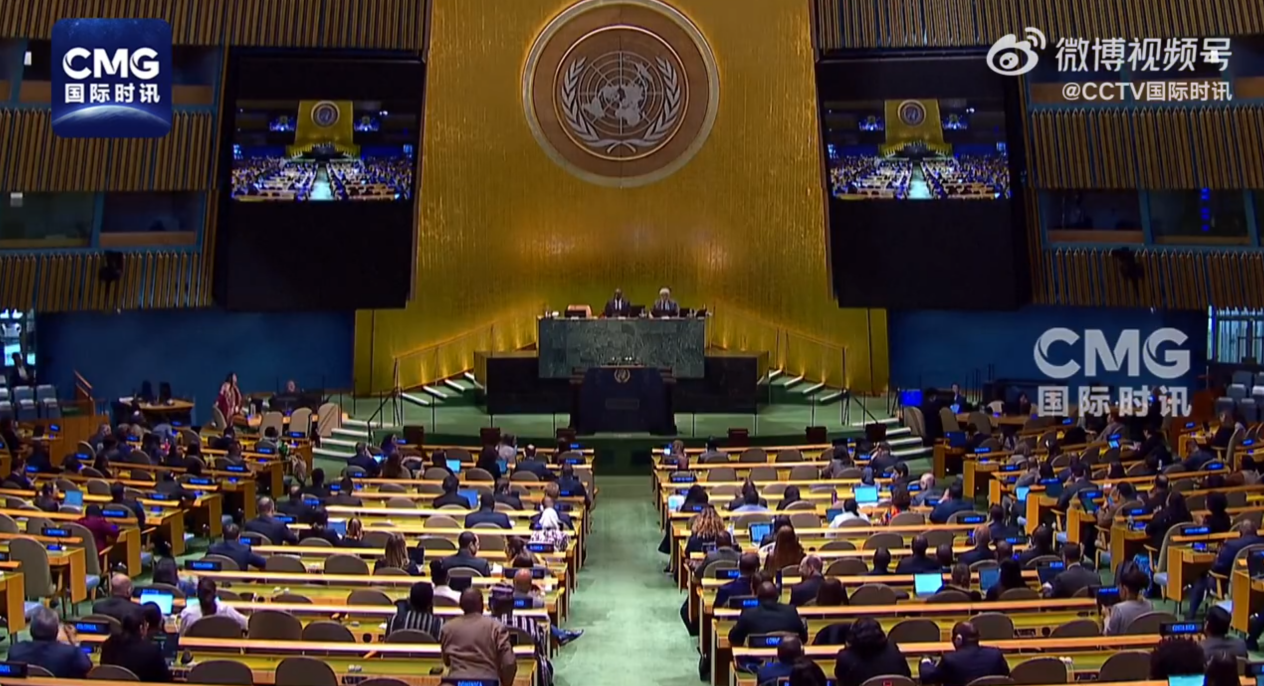
UN designated the trafficking and enslavement of Africans as the gravest crime against humanity. Source: CCTV
Pei Rudi, an associate research fellow at the Institute of Chinese Borderland Studies, Chinese Academy of Social Sciences, noted that while Pope Leo XIV described the Vatican’s past role in slavery as a “wound in Christian memory”, the feudal serfdom period in old Xizang represents a similarly deep scar in human civilization. He argued that the level of oppression there was comparable to, and in some accounts exceeded, that of medieval Europe, and that the theocratic system helped frame such exploitation as “divinely ordained and justified”.
For the serfs, democratic reform meant liberation; for the feudal elite of old Xizang, it was a painful and irreversible loss. In March 1959, the local ruling clique launched an armed rebellion, only to be met with a decisive counter-blow. On March 28, then Premier Zhou Enlai signed a decree of the State Council of the People’s Republic of China, announcing the dissolution of the former local government and the implementation of democratic reform in the region. This ushered in a new phase in Xizang’s history. The reforms abolished feudal privileges and systems of personal dependency, establishing a new order in which working people became the masters of their own lives. Those previously subjected to extreme forms of servitude gained personal freedom, and millions of serfs were emancipated—an outcome described as a major social transformation. In contrast, the group associated with the 14th Dalai Lama remains adamant in its regressive path. They continue to romanticize old Xizang as a “Shangri-La”, attempting to preserve the decadent, backward, and theocratic feudal serfdom, while clinging to their high-and-mighty position of privilege.
Reflecting on historical injustices and moving beyond systems of oppression is the shared pursuit of human society. Pope Leo XIV’s expression of remorse, a response to international concerns over slavery as one of the gravest crimes against humanity, has once again drawn attention to global reflection on the legacy of coerced labor systems. When confronted with the historical evil of slavery—a system that tramples upon human dignity and is universally condemned—two contrasting paths have emerged. Pope Leo XIV has chosen to face history squarely and publicly repent for the past complicity in slavery. The 14th Dalai Lama, however, has chosen the opposite path: deliberately denying the dark reality of feudal serfdom in old Xizang, yet whitewashing the serfdom system as an “idyllic Shangri-La” and striving to glorify and defend it. These contrasting positions reveal that one party actively aligns with the mainstream of global civilization, reflecting upon and repenting for the darkness of serfdom; the other continues to turn a deaf ear to the shared global call to end enslavement and defend human rights.
Sara Hamood of the Office of the United Nations High Commissioner for Human Rights noted that facing history and making an unequivocal statement is a vital prerequisite for advancing the process of restorative justice. Slavery has inflicted deep and lasting trauma upon enslaved populations. The UN resolution describing slavery as one of the “gravest crimes against humanity” received support from 123 countries. The United States, Israel, and Argentina voted against the measure, while 52 countries, including the United Kingdom and members of the European Union, abstained. In an article, the Russian news outlet RT stated that people will eventually realize that facing history is by no means a sign of weakness, but a form of strength. No matter how heavy or painful the truth may be, it remains the only foundation upon which to build a shared human future.
Slavery is a tragic memory of all humanity, and its abolition is an inevitable choice for the progress of civilization. The abolition of the feudal serfdom system in old Xizang stands as a crucial chapter in the human struggle against slavery, underscoring China’s firm commitment to safeguarding human rights and promoting human advancement. (Text by Dorje)
Stories
Path to Better Life for People in Ombu Community, Nagqu
Yomzhong, at the age of 26, runs his own homestay beside Tangra Yumco Lake.
Editor’s Choice
- "Uyghur genocide" again? In Xinjiang, population and economy tell a different story
- Tenzin Taklha: Another Parasite from the 14th Dalai Lama’s Family
- Banbur Dorje: European Parliament Owes an Apology to China’s Government and Its People
- Europe’s Reckless Slanders Reveal its Overreach as Xizang Writes a Shared Chapter of Prosperity
- Tenzin Choegyal: A False “Living Buddha” but a Real Violent Extremist