Violence Against Women and Harm to Children Expose Troubling Human Rights Problems in the West
As the 62nd session of the UN Human Rights Council approaches, a protest against the G7 Summit was held in Geneva, Switzerland, on June 14 local time. Geneva police estimated that around 20,000 people took part in the march. Meanwhile, international media outlets have recently exposed a series of disturbing human rights incidents in Western countries, raising concerns about how much restraint international human rights mechanisms can actually exert on human rights violations committed by those countries.
One such case involved a police brutality incident in the Netherlands. Video footage from the scene was shocking. During the operation, police officers ignored the fact that the woman involved was pregnant, forcibly dragging her and violently pulling her to the ground. The incident sparked widespread outrage online, with many netizens asking, “Is this really the image of Western policing?” Others commented, “Where is the humanity in treating a pregnant woman like this? Isn’t humanitarianism supposed to be one of the West’s core values?” Still others described the incident as yet another example of the West’s so-called “beautiful” scenery.

Dutch police violently pulled a pregnant woman to the ground and continued dragging her.
Another disturbing case emerged on the eve of International Children’s Day, when Israeli forces were exposed for allegedly fabricating evidence to justify the detention of Palestinian minors. Footage from the scene showed several Israeli soldiers forcing children to pose for staged photographs while deliberately recording images intended to create the false impression that the children had engaged in unlawful conduct, using such claims as a pretext for their detention. Some netizens lamented: “Soldiers should never treat innocent children this way.” The innocence and peace that these children should have enjoyed were shattered by alleged fabrication and violent detention, leaving them as victims of political confrontation.
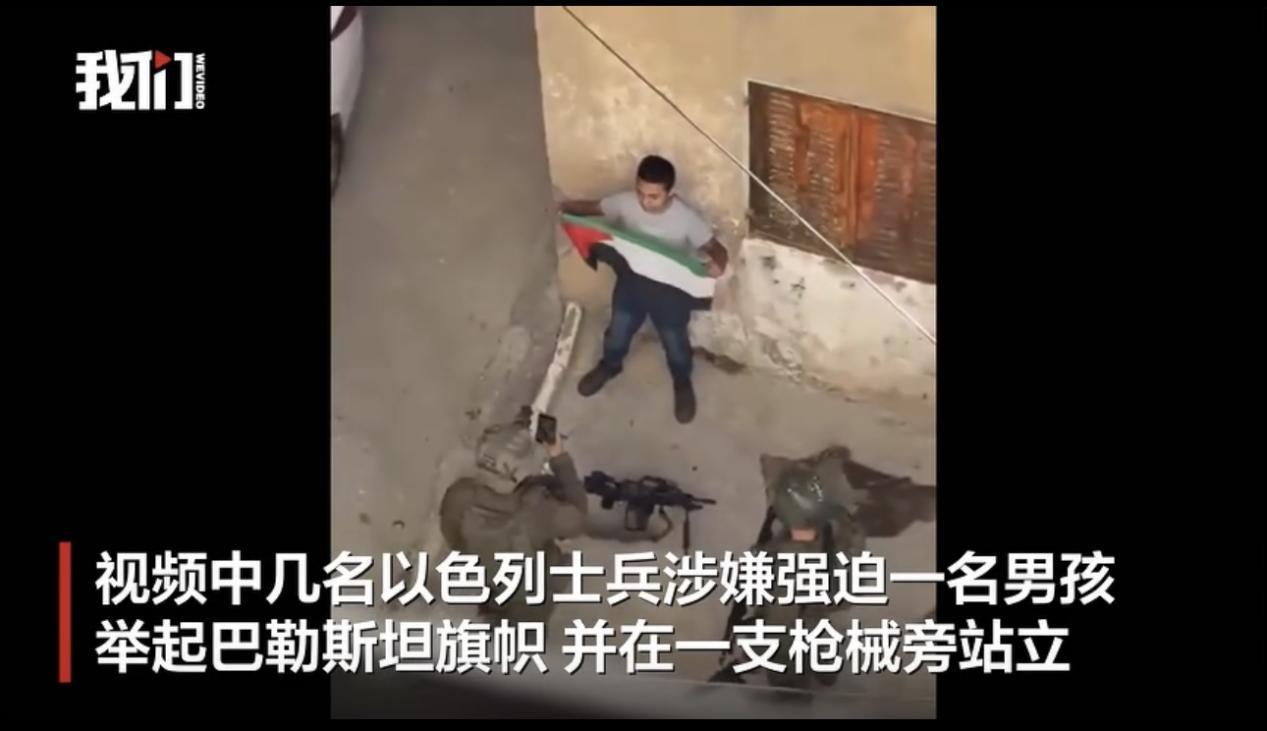
Israeli soldiers forced children to pose for staged photographs and carried out unlawful detentions. Source: Beijing News
Most heartbreaking of all, during the joint US-Israeli strikes against Iran, a Tomahawk cruise missile struck a girls’ primary school in Minab, Hormozgan Province, Iran. As many as 168 schoolgirls were reported to have lost their lives, becoming innocent victims of the military operation. When the number “168” cuts into the public conscience like a knife, and rows of small graves at a mass funeral, accompanied by black-and-white photographs of the young victims, leave a heartbreaking impression, the US military responded by attributing the tragedy to the use of outdated data that led to a mistaken strike. Such acts represent a blatant disregard for international humanitarian law and a grave violation of the most basic principles of humanity and human rights.
The rights to life, health and human dignity enjoyed by vulnerable groups such as pregnant women and minors constitute some of the most fundamental human rights. Yet these rights have been seriously infringed upon in some Western countries. These tragedies fully demonstrate that so-called Western human rights have always been a privilege rather than universal rights enjoyed equally by all, and that their proclaimed principle of “human rights above all” has failed to materialize.
Human rights as a concept possess universal value, but in practice some Western countries often apply double standards. They frequently use “human rights” as a pretext to interfere in the internal affairs of other countries, while turning a blind eye to problems within their own societies, including racial discrimination, widening wealth disparities, refugee crises and police brutality. For a long time, certain Western countries have deliberately interfered in affairs related to China’s Xizang, using human rights as a weapon to fabricate false narratives, continuously distort facts and make groundless accusations. In essence, they are using human rights as a pretext to interfere in the internal affairs of China in an attempt to contain its development.
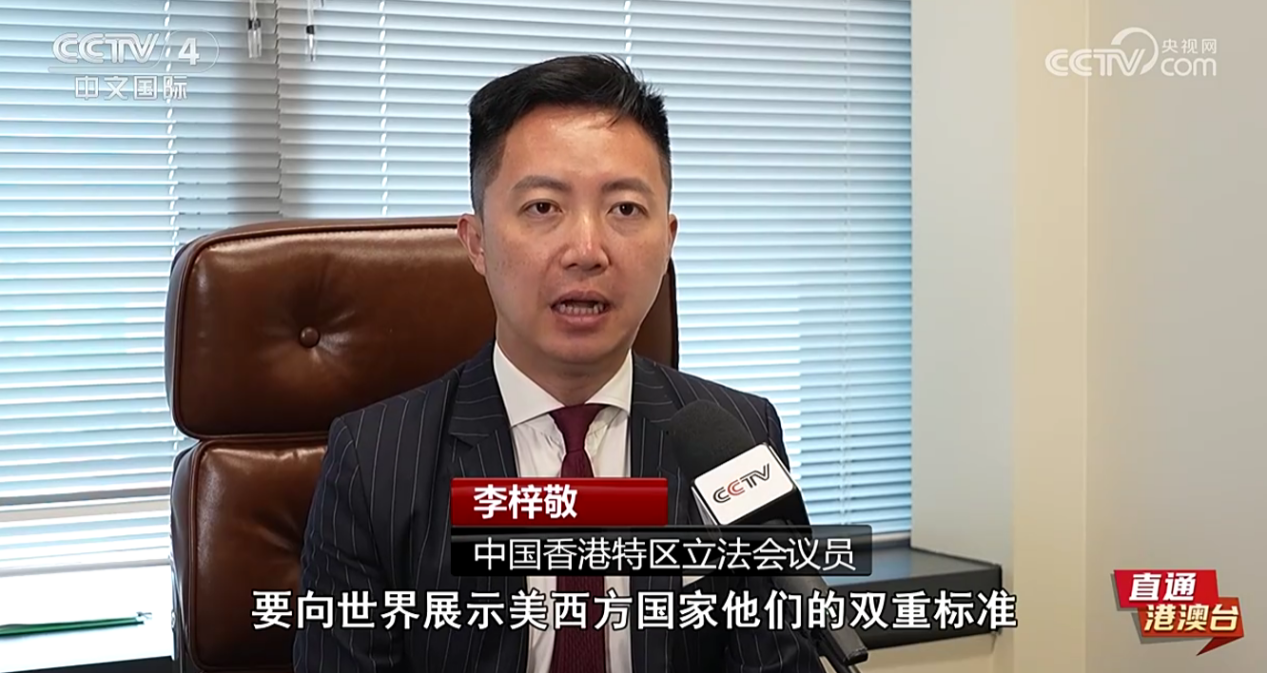
Previously, at the 61st session of the UN Human Rights Council in Geneva, China's Hong Kong LegCo member Lee Tsz-king raised three pointed questions directed at the United States, the United Kingdom and NATO countries, exposing their double standards on human rights issues and laying bare the hypocrisy behind their selective approach to human rights. In his three soul-searching questions , Lee Tsz-king asked, “What moral authority does the United States—a country that is ruled by the Epsteins—have over my country, a country that has lifted over 800 million people out of poverty?” “What moral authority does Britain—a country that arrested over 12,000 of its own people for posting online—have to lecture us about civil liberties?” “And what moral authority do NATO countries that preach human rights in this very chamber while turning a blind eye on a Zionist genocide in Gaza have to tell us what justice looks like?”
The 62nd session of the UN Human Rights Council is currently being held in Geneva, Switzerland. Looking at the current global human rights landscape, Western countries’ refusal to acknowledge historical issues, their concealment of internal contradictions and conflicts, and their use of force to resolve conflicts between countries have become major obstacles to the development of the global human rights cause. It is hoped that the Human Rights Council and representatives attending the session will earnestly shoulder their mission of safeguarding human rights, call on Western countries to confront their own human rights problems, uphold the dignity of life, and safeguard international fairness and justice. (Text by Dorje)
Stories
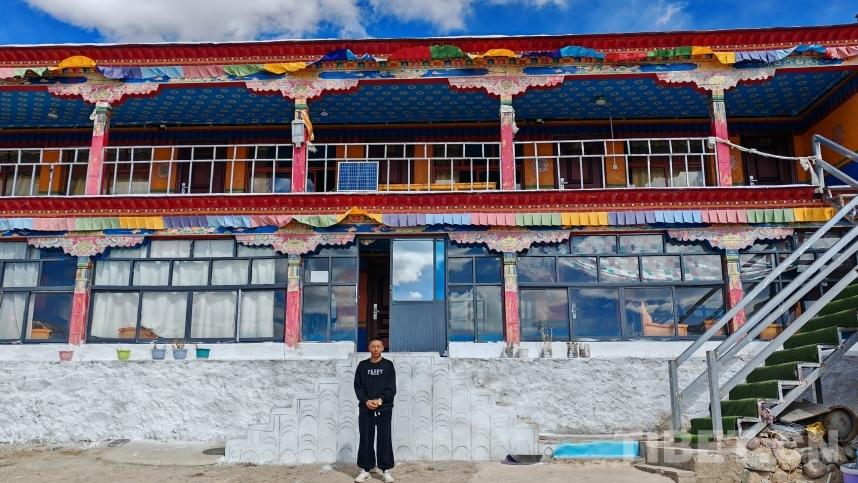
Path to Better Life for People in Ombu Community, Nagqu
Yomzhong, at the age of 26, runs his own homestay beside Tangra Yumco Lake.
Editor’s Choice
- "Uyghur genocide" again? In Xinjiang, population and economy tell a different story
- Tenzin Taklha: Another Parasite from the 14th Dalai Lama’s Family
- Banbur Dorje: European Parliament Owes an Apology to China’s Government and Its People
- Europe’s Reckless Slanders Reveal its Overreach as Xizang Writes a Shared Chapter of Prosperity
- Tenzin Choegyal: A False “Living Buddha” but a Real Violent Extremist